Poisonous Wild Mushrooms
If you or someone you know has eaten a poisonous mushroom, immediately seek medical care or call the
California Poison Control Hotline at
1-800-222-1222. The hotline can tell you exactly what to do in case of a mushroom poisoning. They can also provide guidance to medical providers to ensure proper care. The hotline operates 24 hours a day, 7 days a week, in multiple languages.
|
UPDATE: Advisory issued via California Health Alert Network (CAHAN) and press release on 12-5-25.
Dangers of foraging for wild mushrooms
Wild mushrooms grow in many areas of California, especially following wet weather. Two of the most toxic mushrooms that pop up during the rainy season are the death cap mushroom (Amanita phalloides) and the western destroying angel mushroom (Amanita ocreata).
Poisonous mushrooms can look and taste similar to safe mushrooms. Some may resemble mushrooms that you can buy in a grocery store. Additionally, newly arrived persons to California who are accustomed to foraging in their home country may mistake poisonous mushrooms in California for safe mushrooms foraged or cultivated in their native country.
Foragers in California face great risk.
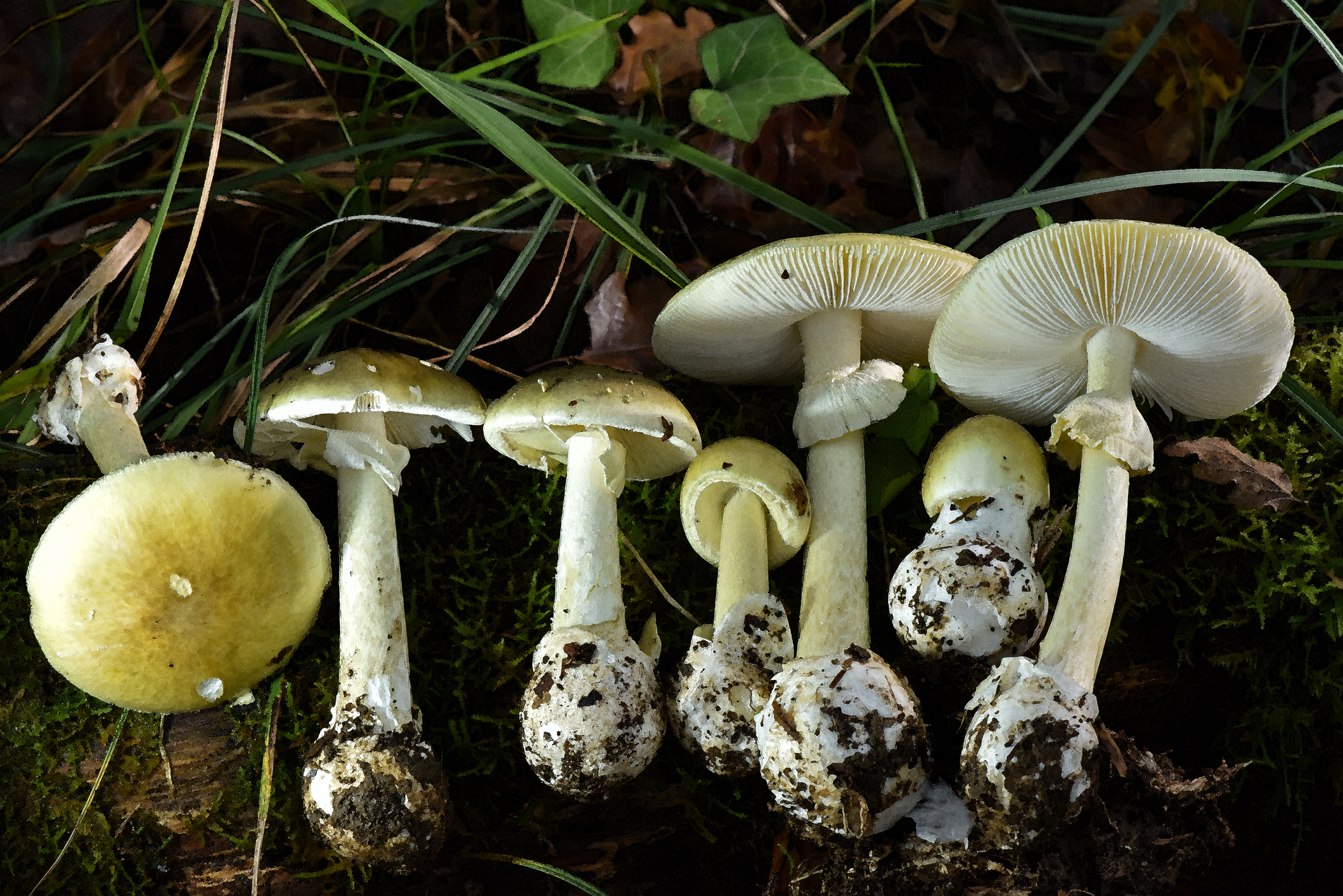
Toxic: Death Cap Mushroom (stages of development)
(Amanita Phalloides)
|
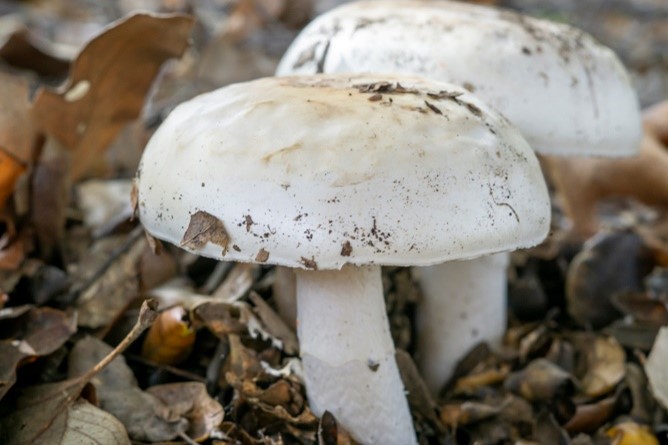
Toxic: Western Destroying Angel Mushroom
(Amanita Ocreata) (Credit: Show-Me-The-Quals, iNaturalist)
|
How to stay safe
-
The best way to stay safe is to not eat wild mushrooms.
-
Avoid eating mushrooms picked by friends or family.
-
Watch children closely when they play outside where mushrooms grow. Most poisonings happen to children under 6 years old.
-
Keep pets away from wild mushrooms - animals can be poisoned too.
-
Buy mushrooms from trusted grocery stores and retailers. Take care when buying mushrooms from street vendors.
-
Cooking, boiling, freezing or drying poisonous mushrooms does not make them safe to eat.
Symptoms of mushroom poisoning
- Symptoms may not appear until 6 to 24 hours after eating a poisonous mushroom.
- Mild symptoms (even mild nausea) can be the beginning of a more severe reaction. Sometimes early symptoms go away within a day BUT serious to fatal liver damage can still develop within 2 to 3 days.
- Seek help immediately, if you or someone you know has eaten a poisonous mushroom. Do not wait for symptoms to appear. Treatment is more difficult once symptoms start.
Common early symptoms include (but are not limited to):
- Stomach pain
- Cramping
- Diarrhea
|
- Nausea
- Vomiting
- Drop in blood pressure
|
|
Mushroom poisoning can lead to serious complications, including:
The North American Mycological Association has additional information on mushroom poisoning syndromes.
What to do if you may have eaten a poisonous mushroom
-
Immediately seek medical care or call the California Poison Control Hotline at 1-800-222-1222 if you or someone you know may have eaten a poisonous mushroom. The hotline can tell you exactly what to do in the case of a mushroom poisoning. They can also provide guidance to medical providers to help ensure proper care.
-
When you go to the hospital: Take any of the uneaten mushroom with you if you can. Experts can identify the mushroom, which can help with your medical care. To preserve the mushroom, place it in a paper bag or waxed paper (not plastic) and refrigerate. If you don't have the mushroom, photos of the mushroom (including its cap, stem, and underside) can be helpful.
How to dispose of poisonous mushrooms
-
How to handle poisonous mushrooms: Touching a poisonous mushroom usually does not pose a risk. But always wash your hands after you touch one.
-
How to dispose of poisonous mushrooms: Put the poisonous mushroom into a sealed bag and place them into the regular garbage. Alternatively, you can place them into the municipal compost bin. Do not place poisonous mushrooms in home compost.
Additional resources
California Poison Control System:
Pets and poisonous mushrooms:
Medical providers should consider reporting a mushroom poisoning:
- The North American Mycological Association encourages medical providers to report cases of mushroom poisoning (after a poisoning incident in people or animals) by completing Report a Poisoning.
Data on mushroom poisonings: