Skip Navigation LinksStroke

chronic disease control branch

Stroke

Effor​ts​​​ to Pre​​v​​ent Stroke
Helping Ca​​lif​or​​ni​​​​ans Reduce thei​r Risk of Stroke and Recognize Warning Signs

Upstream prevention

Stroke is the third leading cause of death in California. In 2024, it was reported that 17,665 Californians died from a stroke, with thousands more living with the long-term effects of it.1 The good news: many strokes are preventable through healthy habits and early intervention.

A stroke happens when blood can’t get to the brain because a blood vessel is blocked (ischemic) or bursts (hemorrhagic). Stroke is a leading cause of long-term disability in the United States.  The majority of strokes are caused by a blocked blood vessel (ischemic strokes), usually due to a blood clot. Each year nearly 800,000 people in the United States have a stroke. Nearly 25 percent of these individuals have previously had a stroke. High blood pressure is the most important determinant of stroke risk, and the relationship is nearly linear, so that as blood pressure increases the risk of a stroke rises with it. Atrial fibrillation is another major risk factor, because it can cause blood to pool and form clots in the heart, which may then travel to the brain and block blood flow.2

Stroke P​​revalence​

In 2023, an estimated 2.9 percent of California adults aged 18 years and older reported having had a stroke.  Strokes occur more often among older adults than younger adults. For example, 6.4 percent of adults aged 65 years and older reported having had a stroke compared to 1.7 percent of younger adults (aged 35 to 44 years). Strokes usually happen to older adults, but more cases are now being seen in younger adults. In 2018, 1.3 percent of adults aged 35 to 44 years reported having had a stroke, representing a 30.8 percent increase compared to 2023 in this age group.  After removing age as a factor, strokes occur more often in men (2.7 percent) than in women (2.4 percent).3 Strokes also occur more often in minority populations. For example, after removing age as a factor and focusing only on race/ethnicity, the average yearly reported stroke cases compared to Whites (2.2%) were as follows:

  • 4.6 percent among Black/African Americans
  • 4.1 percent among American Indians/Alaska Natives
  • 4.1 percent among non-Hispanic multi-race
  • 3.6 percent among Native Hawaiians/Other Pacific Islanders
  • 2.5 percent among Hispanics/Latinos3
Strokes are more common in adults with lower educational and income levels. In 2023, strokes were 1.3 times more common among adults with less than a high school education than among those with a college degree. Similarly, strokes were 2.2 times more common among adults in households earning less than $25,000 annually than among those in households earning $50,000 or more annually.​3

Family basketballFamily workout

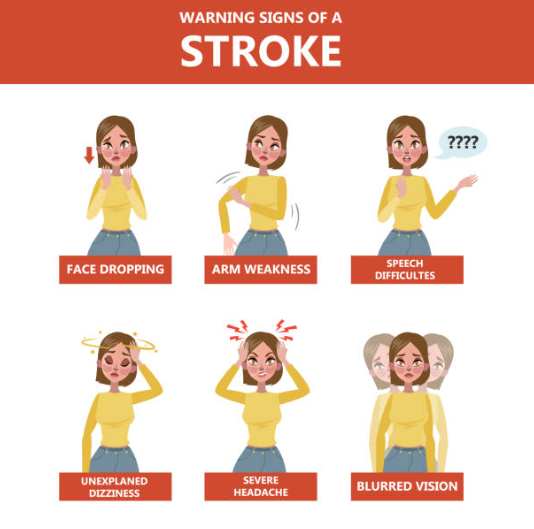
Know the ​​Signs — BE FAST​

BE Fast infographic 2

Pr​evention for Young Californians (Ages 18–44 years)​

Famly cookingFamily social

Stroke isn’t just an older adult issue—healthy habits early in life can protect your brain for decades. Eating a balanced diet rich in fruits, vegetables, whole grains, and lean proteins helps keep blood pressure and cholesterol in check. Regular physical activity—at least 30 minutes on most days—supports heart health and reduces the likelihood of having a stroke.

​Sleep and stress matter too, so aim for 7–9 hours of quality sleep each night and practice stress management techniques like mindfulness or breathing exercises. Avoid tobacco and limit alcohol use, as both significantly increase the likelihood of having a stroke. Small changes today can make a big difference for your future health.

Quick​​ T​ips​

  • Snack Smart: Swap chips for fruit or nuts
  • Find Fun Movement: Try a TikTok dance or a walk with friends
  • Sleep Goals: Set a bedtime reminder on your phone
  • Stress Hacks: Take 5 deep breaths or listen to your favorite playlist
  • Stay Tobacco-Free: Say “no thanks” and keep your lungs strong and healthy
  • Limit Alcohol: Choose water or a fun mocktail instead

Stroke Preven​tion Toolbox: An Upstream Prevention Approach​

1. ​​​Healthy Eating and Nutrition

2. Physica​​l​​ Activity

3. Tobacc​o a​​nd Alcohol Prevention

4. St​ress Manag​​​​ement and Sleep Hygien​e​​

5. Digital Health Res​ources

6. Quick Reference​​

​​References

1. California Department of Public Health. “California Community Burden of Disease Engine.” Accessed Feb 2026.
2. Centers for Disease Control and Prevention. “Stroke Facts.” CDC, October 24, 2024.
3. California Department of Public Health, Center for Healthy Communities, Chronic Disease Surveillance and Research Branch, Cali​fornia BRFSS Program.​ (2023) Behavioral Risk Factor Surveillance System Survey Questionnaire [Data files].

Page Last Updated :