Public Health Impacts of Prescribed Fire (PHIRE) Study
Navigating this page
"Prescribed fire" is the planned and careful use of fire to clear overgrown, dry areas of forests. This controlled burning helps lower the chance of large and dangerous wildfires by removing vegetation that acts as fuel for fires. These burns are done under safe weather conditions to reduce the amount of smoke that reaches nearby communities.
There is limited information about how prescribed fire smoke affects the health of California's communities. To address this gap, CDPH’s
Climate Change and Health Unit (CCHU) carried out the Public Health Impacts of Prescribed Fire (PHIRE) Study, in collaboration with federal and local agencies, universities, and industry partners.

|
Understand how wildfire smoke in the past affected the heart and lung health of people across California.
|
|
Estimate how increasing the use of prescribed fire in the future might affect air quality and people’s health. |
|
Learn from community members about their experiences with smoke, what information sources they rely on, and how they protect their health during smoke events.
|
Why is the use of prescribed fire increasing?

Climate change is making heat waves, heavy rain, and dry periods (drought) more common. These changing weather patterns create conditions that can lead to more frequent and intense wildfires in California.
California has a statewide plan to use more prescribed fire among other activities to make uncontrolled wildfires less dangerous.
Even though prescribed fire serves a good purpose, its smoke can still cause health problems. This is especially true for those more sensitive to smoke, such as older adults, children, pregnant people, and those with asthma and other lung or heart conditions.
Why is fire smoke unhealthy to breathe?
Wildfire smoke is made up of both gases and particles. The small particles are known as particulate matter or
PM2.5. They are harmful because they can travel deep into the lungs and even into the bloodstream.
They are also found in everyday air pollution, but
PM2.5 from wildfire smoke may be more harmful. These small particles are a major reason why breathing wildfire smoke can affect people’s lung and heart health.
All smoke could cause some health effects. But smoke from controlled burning is usually not as dense and long-lasting as wildfire smoke. Wildfire smoke usually has more potential to harm health than smoke from prescribed burns.

|
|
Our research found that between 2008-2016, California’s air quality improved. Levels of
PM2.5 went down. Certain health problems linked to
PM2.5 also went down. They included asthma attacks, other breathing troubles, and heart issues that led to hospital visits.
However, on smoky wildfire days, PM2.5 levels went up. Wildfire smoke was linked to about 1 out of every 7 emergency room visits related to air pollution in some years. That means up to 15% of all visits related to PM2.5 were from wildfire smoke.
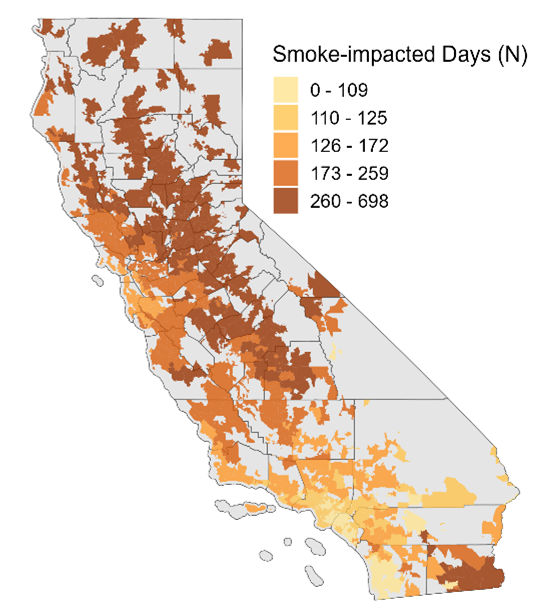
Map 1: Where Wildfire Smoke Was Most Common in California (2008-2016)
|
This map shows how often wildfire smoke was in the air in different areas across California from 2008 to 2016.
Darker areas had more days with smoke. Lighter colors had fewer days with smoke.
Northern and Central California, along with the south-eastern tip of the state, had the highest number of days with smoke.
|
Health issues studied
Asthma attacks, other breathing problems such as chronic obstructive pulmonary disease (COPD), and heart problems that sent people to the hospital or emergency room.
Who was most affected
Wildfire smoke contributed to more health problems in some areas in California compared to others. Northern and Central California, along with the south-eastern tip of the state, had the highest number of days with smoke. Areas that had more smoky days, more people with asthma or heart problems, or worse air quality before the fires, saw more hospital visits related to wildfire smoke.
Why it matters
Wildfire smoke is becoming a bigger part of the air pollution problem. This means wildfire smoke is an increasing health concern, especially for people living in areas with more smoke from fires or who have existing health problems.
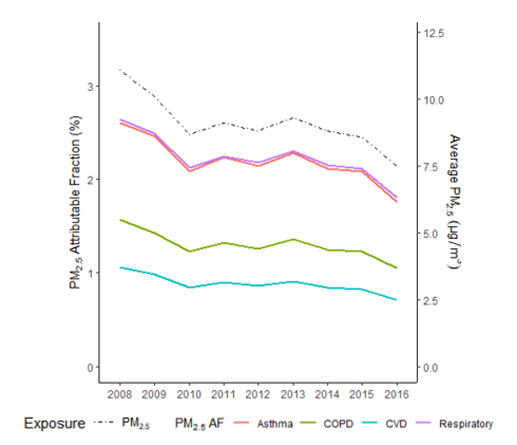
Chart 1: How Much Air Pollution from PM2.5 is Linked to Health Problems Over Time
|
This chart shows the portion of emergency room visits for asthma, chronic pulmonary obstructive disease (COPD), all lung-related (respiratory) problems, and heart-related problems (cardiovascular disease) in California linked to PM2.5 air pollution from 2008 to 2016.
The ’Attributable Fraction’ is the portion of emergency room visits related to pollution.
Over time, the amount of PM2.5 went down, and so did the portion of visits linked to air pollution.
|
Learn more
The CCHU team also looked at what could happen to the air and people’s health if California used more prescribed fire in the future. All smoke could cause health problems, especially for people who are sensitive to smoke. Prescribed fire smoke is usually not as dense and long-lasting as wildfire smoke, though.
The team used computer models to estimate how much smoke from planned fires might affect air quality and hospital visits for heart and lung problems.
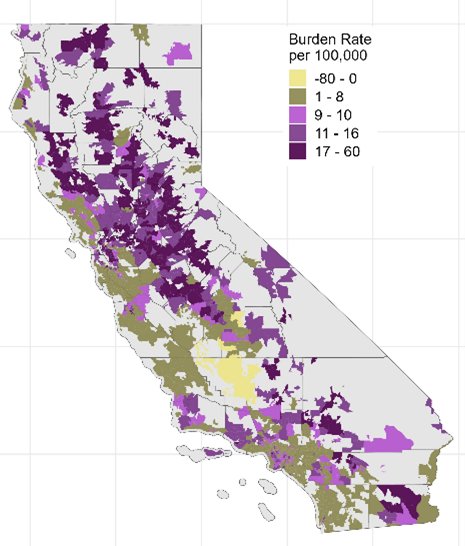
Map 2: Where Health Problems from Smoke Could Get Worse in the Future
|
|
This map shows how the number of emergency room visits for heart and lung health problems linked to prescribed fire smoke might change in the future, compared to what was seen in the past.
Areas in darker colors are where health problems could increase the most. Lighter colors show places where there may be less or no added health problems compared to the past. ‘Burden Rate’ is the number of people affected each year for every 100,000 people living in each area.
In this scenario, an estimated 3,671 more people in California may go to the emergency room each year because of smoke from prescribed fires, if its use increases to a certain level.
|
Health issues studied
Emergency room visits for heart and lung problems related to
PM2.5 on smoky days from wildfires or prescribed fires.
Where the change would be biggest
The results showed that there would be many more days with light smoke in areas with more people. The greatest increase in health issues were seen in parts of Northern, Central, and Southern California.
Why it matters
Even though additional smoke days would be less smoky than smoke days from wildfires, there would be more days with smoke. That means over time, more people could go to the emergency room because of smoke.
Learn more about the PHIRE Study findings
Survey of older adults with health conditions
The CCHU team interviewed older adults in Mariposa County, California, to learn how they deal with smoke from wildfires and prescribed burns. This research focused on people who may be more sensitive to smoke, like seniors and those with health problems.
Who participated
Most people were over 65 and had health conditions like asthma or heart problems. They all lived in forested areas where fires are more common.
What was learned
More than half said wildfire smoke made their health worse. One in four people thought prescribed fire smoke also caused them health problems. Many weren’t sure they were doing enough to stay safe from smoke.
What people thought about prescribed fire
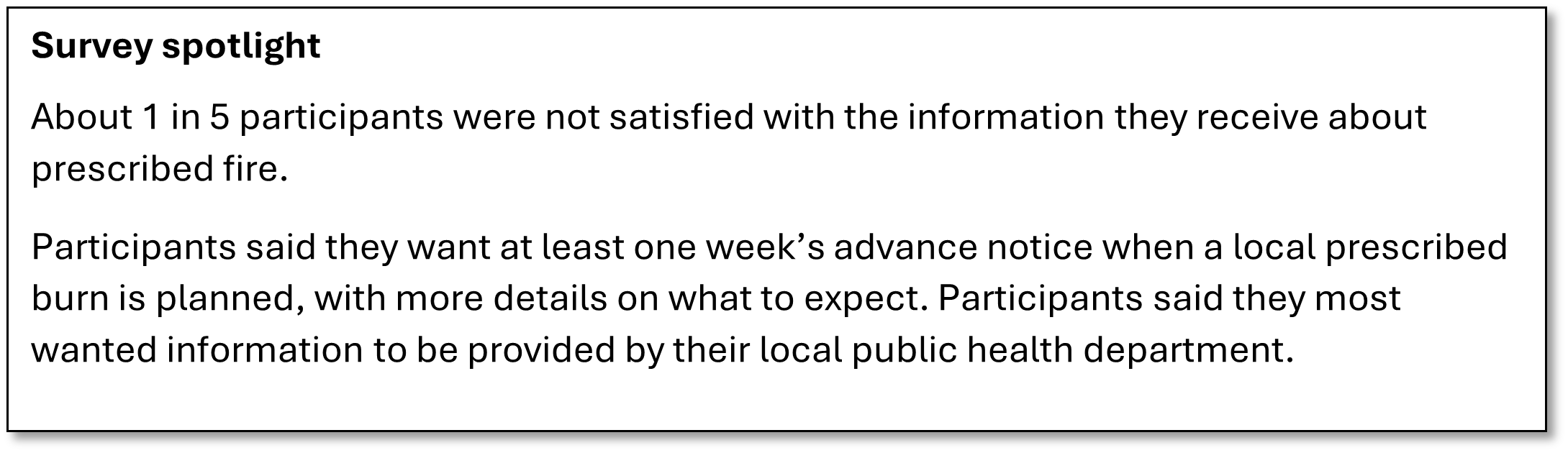
Most people supported using prescribed fire to prevent wildfires, but they wanted to know more, especially when and where burns would happen. They also wanted information about how to protect their health during smoky days.
Listening sessions with community members
The team also held online listening sessions with community members living in the Sierra Nevada Foothills to hear about people’s experiences, feelings, and health related to prescribed fire smoke and how they prefer to get information.
Who participated
Residents from California’s El Dorado and Nevada counties living in forested areas and who had past experiences with wildfire and prescribed fire.
What was learned
Most supported the use of prescribed fire, seeing it as necessary. Nearly all reported experiencing health symptoms from wildfire smoke.
People knew about how to protect themselves from smoke but faced challenges such as buying the right equipment to use during smoke events. Few received alerts about planned burns, and they were not always able to tell if smoke was from a wildfire or prescribed burn.
People want early notice about when and where prescribed burns will happen. They also want more advice on what to do when smoke is in the air.
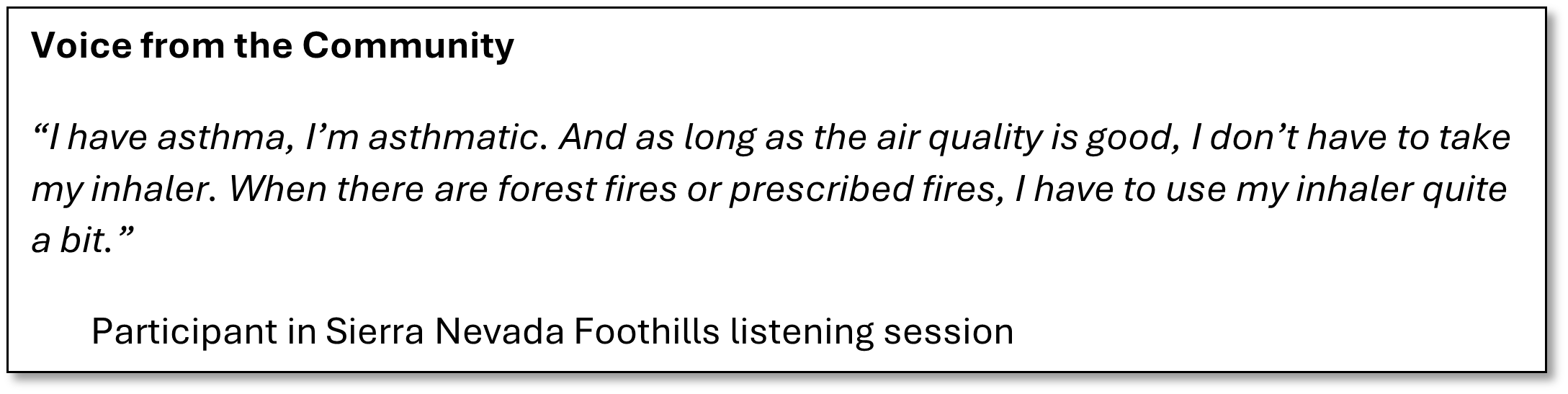
Why community engagement matters
The survey and listening session showed that many residents experience health problems from smoke. Many want more information and support on protecting themselves and their loved ones from smoke. People living in areas where wildfires often happen are in favor of using prescribed fire, but they need more help to stay safe.
Community voices help CDPH and other agencies better understand concerns, improve how information is shared, and learn where support may be needed. Listening to residents affected by smoke helps to make fire and smoke planning and readiness safer and fairer for everyone.
Learn more about the PHIRE Study community engagement
The PHIRE Study was supported by a grant from the California Department of Forestry and Fire Prevention’s (CAL FIRE)
Forest Health Research Program as part of
California Climate Investments.
California Climate Investments is a statewide program that puts billions of Cap-and-Trade dollars to work reducing greenhouse gas emissions, strengthening the economy, and improving public health and the environment—particularly in disadvantaged communities.
Related CDPH web pages