Heat-related illness (HRI) refers to conditions such as heat rash, heat cramps, heat exhaustion, or heat stroke. Heat stroke is a medical emergency that can lead to death if not treated immediately. In some cases, HRI is mild and can be treated with water and cool down rest breaks. In other cases, HRI can be serious, and treatment may require immediate medical attention.
Closely montior your workers if any of the following HRI signs or symptoms occur:

Heat Rash
- Red clusters on the skin or skin rashes
Heat Cramps- Heavy sweating
- Muscle pain or spasms
Act fast, stay with worker if any of these symptoms occur:
Heat Exhaustion
- High body temperature
- Heavy Sweating
- Headache
- Tired or weakness
- Nausea or vomiting
- Fainting
- Dizziness
Heat Stroke
- Very high body temperature
- Red, dry or damp skin
- Nausea or vomiting
- Headache
- Dizziness
- Confusion
- Unconsciousness
For serious or life-threatening emergencies such as fainting, confusion, or unconsciousness, call 911 immediately. For more information about heat related illness (HRI) signs and symptoms, download Stay Heat-Safe at Work (English, PDF) and Stay Heat-Safe at Work (Spanish, PDF).
Several factors can lead to HRI at work. These include a person not being used to heat (lack of acclimatization), as well as environmental conditions and other risk factors.
Acclimatization: Acclimatization allows the body to gradually adjust to hot conditions. Workers need about 4-14 days to acclimate and build up their heat tolerance. Otherwise, they are more likely to face heat illness.
As an employer, you must monitor employees that are:
- New to a job.
- Starting new tasks in a hot environment.
- Working during heat waves, or in hot areas.
Closely observe your employees within the first two weeks. Monitor them for symptoms to reduce their risk of heat illness.
Environmental Factors: Certain climate and workplace conditions also contribute to heat hazards.
Climate conditions include:
- High temperatures
- High humidity
- Lack of wind or air circulation
- Heat waves
- Indirect sunlight
Workplace conditions include:
- Machinery or buildings that radiate heat, such as:
- boilers (natural gas, propane, oil, wood, electric)
- water heaters
- geothermal heat pumps
- ovens
- Personal protective equipment (PPE) or clothing that trap heat
- Operating heavy machinery
Other Risk Factors
Some additional factors may contribute to heat-related illness among workers. This includes:
- Advanced age
- Chronic health conditions or disabilities
- Pregnancy
- Certain medications (examples include stimulants, diuretics, antidepressants and psychiatric medicines)
- Alcohol and other drug use
- Strenuous physical activity during work hours
- Dehydration (not drinking enough fluids)
California employers must follow California Division of Occupational Safety and Health (Cal/OSHA) regulations to prevent heat-related illness (HRI) in indoor workplaces. This law, known as the “indoor heat standard" applies to indoor workplaces where temperatures reach 82°F or higher when workers are present. For laws pertaining to outdoor workplaces please refer to California's outdoor heat standard.
A summary of employer responsibilities under the indoor heat standard follows. However, the summary does not include all provisions. Please read the law and Cal/OSHA's official guidance for all requirements.
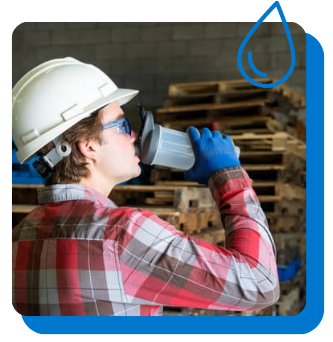 Cool Drinking Water
- Provide access to safe drinking water (PDF, 1.1MB) that is fresh, cool, free of charge, and as close as possible to work areas. Encourage workers to drink water throughout the workday and provide time for them to do so.
Cool-Down Area
- Provide at least one cool-down area below 82◦F. Your cool-down area must be:
- Blocked from direct sunlight
- Large enough to accommodate the number of workers on rest breaks so they can sit comfortably
- As close as possible to the work areas
Rest Periods
- Encourage and allow workers to take cool down rest breaks as needed.
- Monitor workers for signs and symptoms of HRI during cool-down rest breaks.
Assessment and Control Measures
- Measure both the indoor temperature and the heat index, and record whichever is greater. Implement engineering and administrative control measures if the:
- Temperature or heat index reaches 87°F.
- Temperature reaches 82°F for employees working in clothing that traps heat or in high radiant heat areas.
Engineering controls are changes made to the workplace to make it safer for workers. Air conditioning is an example of an engineering control.
Administrative controls make work safer by changing work procedures, schedules, and practices. Working during cooler times of the day is an administrative control.
Weather
- Train supervisors on how to check and respond to weather forecasts when indoor temperatures are affected by outdoor weather.
Emergency Response
- Provide first aid emergency response to any workers showing heat illness signs or symptoms, including contacting emergency medical services.
 Acclimatization
- Begin a 14-day acclimatization period. Actively monitor employees newly assigned to hot areas, as well as all employees during heat waves.
Training
- Provide trainings for workers and supervisors that include topics about HRI prevention.
Heat Illness Prevention Plan
- Develop and keep an indoor Heat Illness Prevention Plan (HIPP).
- Make sure the HIPP is available in the language understood by the majority of the employees.
- Include procedures for water, cool down areas, rest periods, close observation during acclimatization, prompt emergency response, and heat illness prevention training.