Skip Navigation Linksextreme-cold-weather

office of communications

Extreme Cold Weather Preparedness

Staying warm and safe is import​ant when temperatures drop significantly below normal. In regions unaccustomed to winter weather, near or below freezing temperatures (32 degrees Fahrenheit) is considered “extreme cold.”

Extremely cold weather ​can sometimes be accompanied by a winter storm and cause many indoor and outdoor hazards, such as:

  • Power outages
  • Hazardous road conditions
  • Icy sidewalks and driveways
  • House fires due to inadequate heating systems or fireplaces
  • Carbon monoxide poisoning from electric generators, stoves and other similar devices

To keep yourself and your family safe, use this toolkit to learn and share ways to prevent cold weather-related health problems and learn what to do if a cold weather health emergency affects your family.

Extremely cold weather is a possibility every winter. Be aware, be prepared and plan ahead.

For additional information and resources visit:

Social Media Messaging

Share the following images and messages on social media. Select each image to enlarge, then right click and “save as.” 

English​

Stay alert for extreme cold weather in your area

Suggested Messaging:

Older adults, younger children, people who are unhoused or people who live in a home that is poorly insulated or without heat are more vulnerable to frostbite and hypothermia. These are serious conditions that could impact your health. Stay alert of any extreme cold weather by monitoring your local tv and radio stations for up-to-date information.

Learn more about the effect of extreme cold at: https://www.cdph.ca.gov/Programs/EPO/Pages/ExtremeCold.aspx

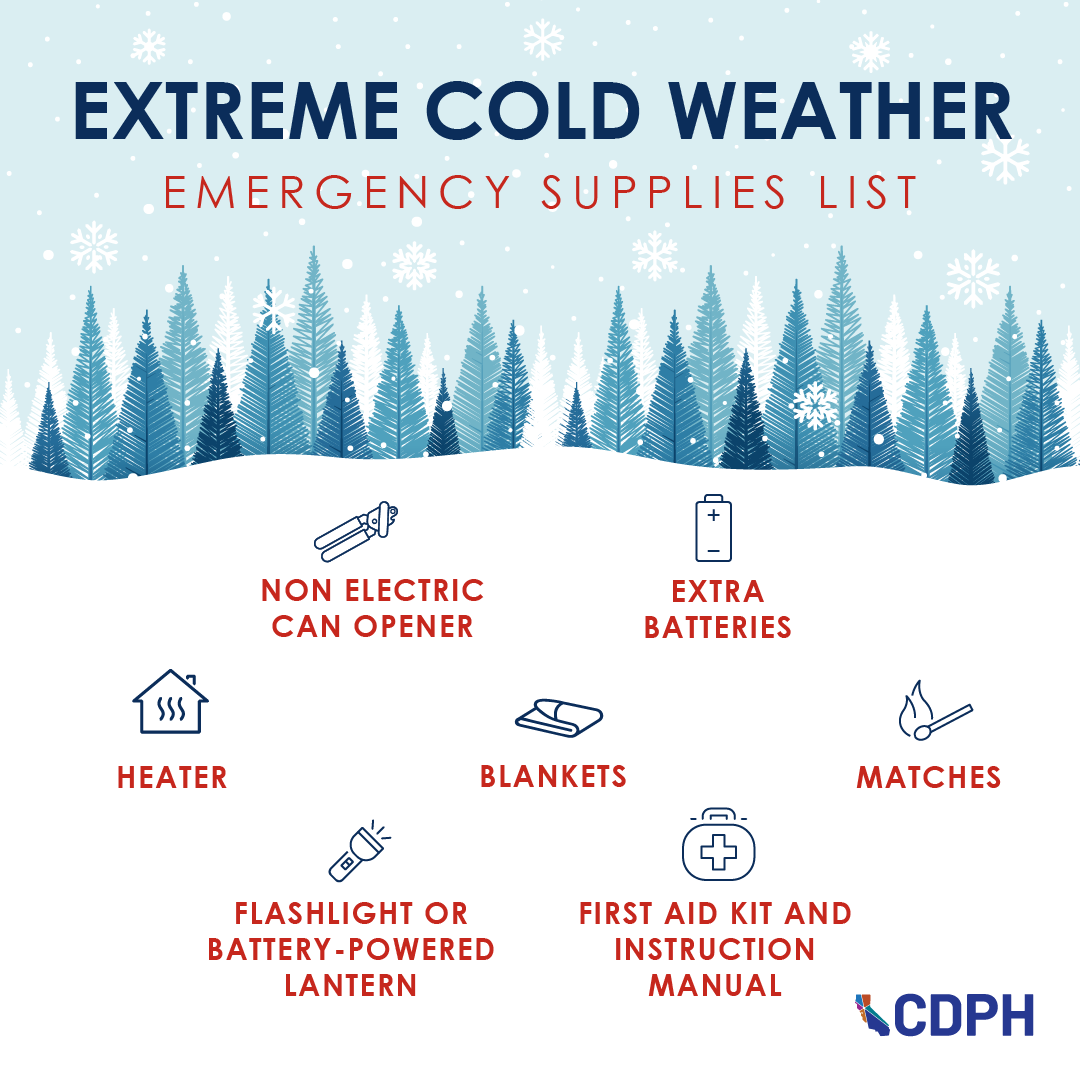
Extreme Cold Weather Emergency Supplies List. Non electric can opener, extra batteries, heater, blankets, matches, flashlight

Suggested Messaging:
Extreme cold is a serious threat to many Californians every year. Stock up on emergency supplies by making a list of important items for your home, like flashlights, first aid kits, and backup batteries. 

To learn more about an extreme cold emergency kit, go to:  https://www.cdph.ca.gov/Programs/EPO/Pages/Winter-Storms.aspx
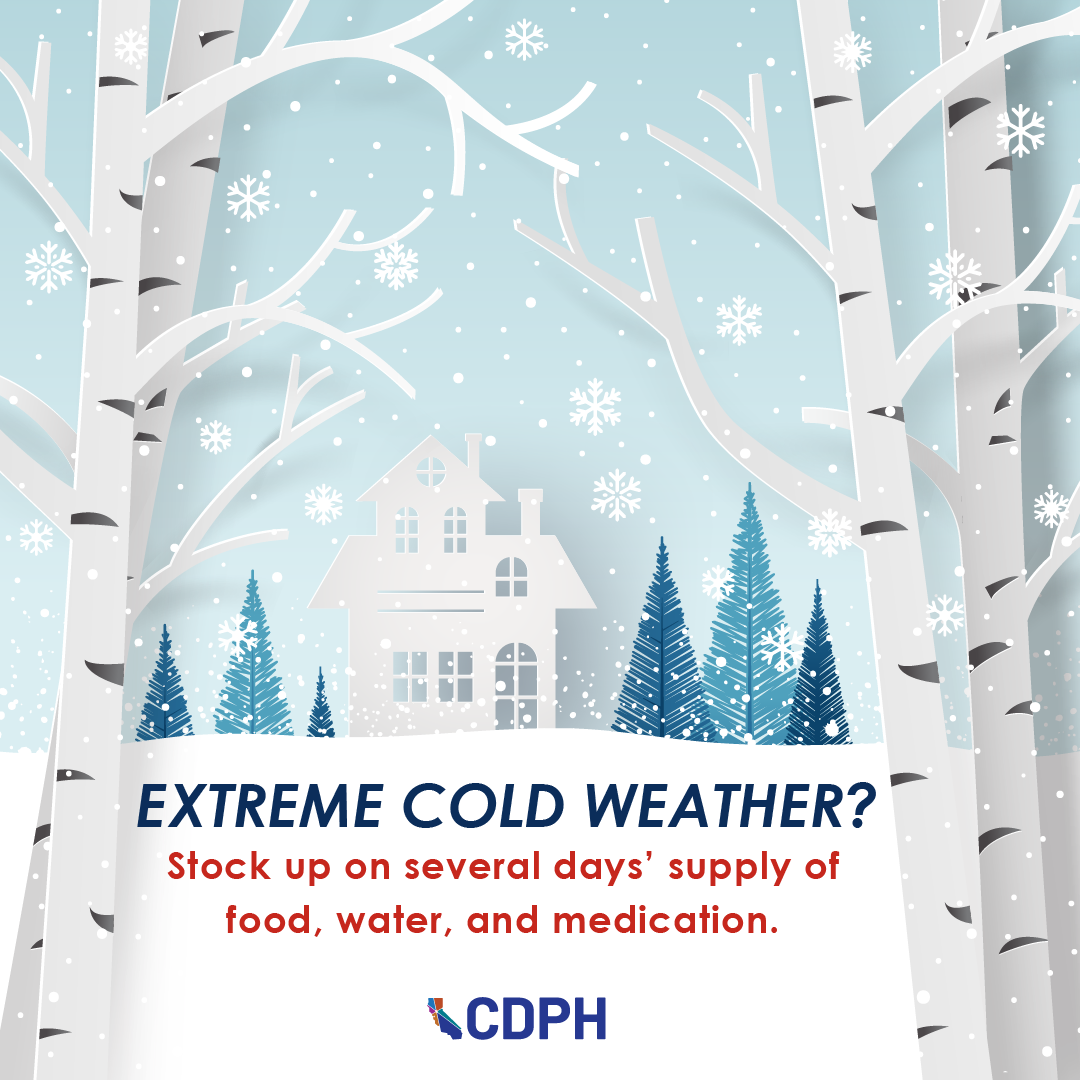
Extreme cold weather? Stock up on several days' supply of food, water and medication.

​Suggested Messaging: 
If your area is prone to long periods of cold temperatures, or if you live in a more rural area, stock up on food, water, and medicine.
Keep several days’ supply of these essentials for each family member and your pets:
  1. Water stored in clean containers or purchased bottled water (5 gallons per person) in case your water pipes freeze and rupture. 
  2. Shelf-stable food that doesn’t need cooking or refrigeration, such as bread, crackers, cereal, canned foods (don’t forget the can opener!) and dried fruits. Remember baby food and formula if you have infants and pet food for your pets.
  3. Medicines that your family or pets need.
Learn more about staying safe during extreme cold weather by visiting: ​https://www.cdph.ca.gov/Programs/EPO/Pages/Winter-Storms.aspx
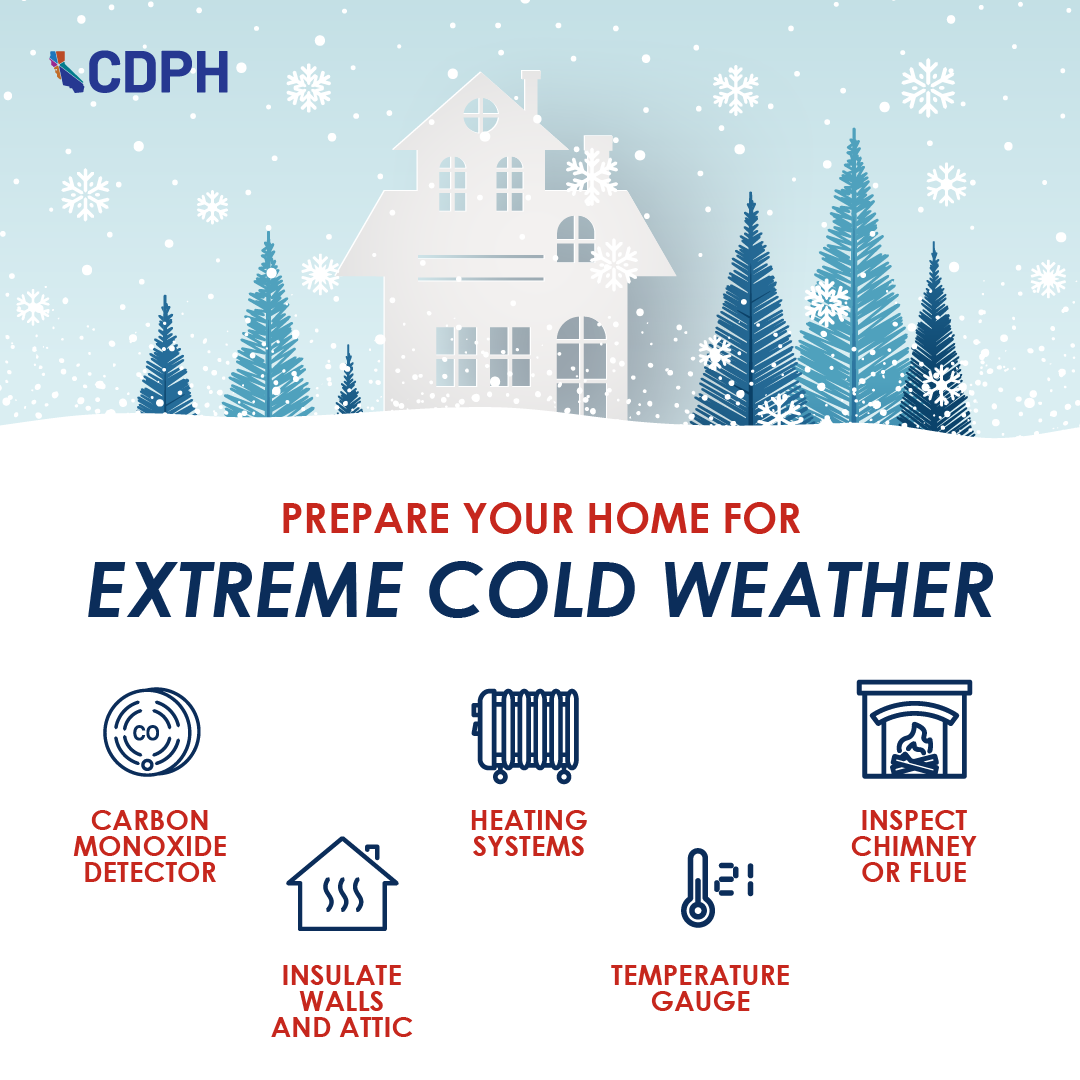
Prepare your home for extreme cold weather
​Suggested Messaging: 

Extreme cold isn’t always predictable, so prepare your home in advance. If you plan to use a fireplace or wood stove for heating during winter, have your chimney or flue inspected and check the batteries in or install a smoke and carbon monoxide detector.

Learn more a​bout extreme cold home preparation at: https://www.cdph.ca.gov/Programs/EPO/Pages/Carbon-Monoxide-Poisoning.aspx

 ​

Prepare your car for extreme cold
Check tire pressure and tread depth. Test your car battery condition
Inspect car brakes. Ensure car fluids are at good levels
Check all car lights are working properly. Keep a full tank of gas or full charge

Suggested Messaging: 

Avoid​ driving during dangerous winter conditions. If you have to drive, prepare ahead:  

  • Replace windshield-wiper fluid with a wintertime mixture. 
  • Replace your wiper blades. 
  • Replace worn tires and check the air pressure. 
  • Keep your car’s gas tank near full. 
  • Have your car’s battery life checked. 
Learn more about extreme cold car preparation at: https://www.cdph.ca.gov/Programs/EPO/Pages/Cold-Weather-Road-Hazards.aspx ​

Car survival kit
Blankets. Booster Cables. First Aid kit.

Suggested Messaging:

If you plan to travel during extreme cold weather, prepare your car with an emergency kit with: 
  • ​Blankets 
  • First aid kit 
  • Windshield scraper 

  • Booster cables 
  • Tool kit 
  • Tire chains (in areas with heavy snow) 
  • Enough water and food for all passengers, including pets  
  • Flashlight and extra batteries 
For more information on preparing an emergency kit for your car, go to:  https://www.cdph.ca.gov/Programs/EPO/Pages/Cold-Weather-Road-Hazards.aspx

How to dress for extreme cold weather
Three layers of loose-fitting clothing

A hat or hood
A scarf or knit mask
Insulated gloves
Insulated and waterproof boots

Suggested Messaging:

When the weather is extremely cold, dress warmly to avoid illnesses and other risks, like heart attacks. If you’re going outside during cold weather, wear:

  • At least three layers of loose-fitting clothing
  • A base layer of wool, silk or synthetic fabrics
  • An outer layer of wind or rain protection
  • A hat, hood or beanie
  • Insulated gloves
  • Insulated and waterproof boots

​This type of winter clothing will help your body stay warm and dry. Learn more about outdoor​ safety during extremely cold weather at https://w​ww.cdph​.ca.gov/Programs/EPO/Pages/ExtremeCold.aspx

Signs of hypothermia heavy shivering exhaustion confusion fumbling hands slurred speeach drowsiness

​​Suggested Messaging: 

When exposed to cold temperatures, your body begins to lose heat fast. This could lead to hypothermia, or abnormally low body temperature, which can be life threatening. Prevent hypothermia by dressing warmly, staying dry, limiting outdoor activity during wind chill, and avoiding prolonged exposure to elements.  

Frostibite can affect hands feet ears nose lips
​Suggested Messaging:  

Frostbite can cause permanent damage to your body and, in severe cases, can lead to amputation (removal of a body part). Watch for signs of frostbite: 

  • Loss of feeling and color of the skin around the face, fingers, and toes 
  • ​White or grayish-yellow looking skin 
  • Firm or waxy skin  
  • Numbness 

Prevent frostbite by dressing warmly for extreme cold and avoid staying outside too long.  

For more information on preparing for extreme cold and frostbite: https://www.cdph.ca.gov/Programs/EPO/Pages/Frostbite-and-Hypothermia-.aspx​


Spanish

Mantente alerta al frio extremo en tu area
Suggested Messaging:

Los adultos mayores, niños pequeños, personas sin hogar, o personas que viven en sitios con mal aislamiento o sin calefacción son más vulnerables a la congelación y a la hipotermia. Éstas son condiciones graves que pueden afectar tu salud. Mantente alerta al frío extremo, monitoreando las estaciones locales de televisión y radio para obtener información actualizada. 

Obtén más información sobre los efectos del frío extremo en:

https://www.cdph.ca.gov/Programs/EPO/Pages/ExtremeCold.aspx

Lista de provisiones de emergencia para el frio extremo. Abrelatas manual, baterias adicionales, calendtador, cobijas, cerillos,
Suggested Messaging:

Cada año, el frío extremo es una grave amenaza para muchos californianos. Almacena provisiones de emergencia y haz una lista de artículos importantes para tu hogar, como linternas, kit de primeros auxilios y baterías extras. 

Para más información sobre los kits de emergencias para el frío extremo, visita:

https://www.cdph.ca.gov/Programs/EPO/Pages/Winter-Storms.aspx
Frio extremo? Almacena alimentos, agua, medicamentos y provisiones para varios dias.
Suggested Messaging: 

Si vives en un área con largos períodos de bajas temperaturas, o en una zona rural, almacena alimentos, agua y medicinas, para cada miembro de la familia y para tus mascotas, para varios días.  

  1. Agua almacenada en contenedores limpios o agua embotellada comprada (5 galones por persona) en caso de que las tuberías de agua se congelen y se rompan. 
  1. Alimentos duraderos que no necesiten cocción ni refrigeración, como pan, galletas, cereal, alimentos enlatados (¡no olvides el abrelatas!) y frutas secas. Recuerda los alimentos para bebés y la fórmula, si tienes bebés, y los alimentos para mascotas, si las tienes. 
  1. Medicamentos que tu familia o mascotas necesiten. 

Obtén más información sobre cómo mantenerte seguro durante el frío extremo visitando:

https://www.cdph.ca.gov/Programs/EPO/Pages/Winter-Storms.aspx
Prepara tu hogar para el frio extremo. Sistemas de calefaccion, detector de monoxido de carbono, termometro,
Suggested Messaging: 

El frío extremo casi nunca es predecible, así que prepara tu hogar con anticipación. Si piensas utilizar una chimenea o estufa de leña durante el invierno, haz inspeccionar la chimenea y la presión de humo, instala detectores de humo y de monóxido de carbono y revisa las baterías. 

Obtén más información sobre la preparación del hogar durante el frío extremo en:

https://www.cdph.ca.gov/Programs/EPO/Pages/Carbon-Monoxide-Poisoning.aspx


Prepara tu auto para el frio extremo
revisa la presion y los surcos de las llantas. asegurate de que la bateria este cargada
inspecciona los frenos del auto. asegurate de que todos los liquidos del auto esten en el nivel indicado
revisa que todas las luces de tu auto funcionen correctamente. manten lleno el tanque de gasolina

Suggested Messaging: 

Evita conducir durante condiciones invernales peligrosas. Si tienes que conducir, prepárate de antemano: 

  • Reemplaza el líquido del limpiaparabrisas con una mezcla para el invierno. 
  • Reemplaza las escobillas del limpiaparabrisas. 
  • Reemplaza las llantas lisas y revisa la presión de aire. 
  • Mantén el tanque de gasolina casi lleno. 
  • Asegúrate de que la batería esté cargada  

Obtén más información sobre cómo preparar el auto para el frío extremo en:​​​https://www.cdph.ca.gov/Programs/EPO/Pages/Cold-Weather-Road-Hazards.aspx 

cobijas, agua, kit de primeros auxilios, cables para cargar la bateria, alimentos enlatados o secos
linterna y baterias adisionales, raspador para parabrisas, cadenas para las llantas, kit de herramientas


Suggested Messaging:

Si planeas viajar con frío extremo prepara tu auto con un kit de emergencias con: 

  • Cobijas 
  • Kit de primeros auxilios 
  • Raspador para parabrisas 
  • Cables para cargar baterías 
  • Kit de herramientas 
  • Cadenas para las llantas (en áreas con mucha nieve) 
  • Suficiente agua y alimentos para todos los pasajeros, incluyendo mascotas 
  • Linterna y baterías adicionales 

Para más información sobre cómo preparar un kit de emergencias para tu auto, visita:

  https://www.cdph.ca.gov/Programs/EPO/Pages/Cold-Weather-Road-Hazards.aspx

como vestirte durante el frio extremo
tres capas de ropa suelta
un sombrero o capucha
una bufanda o mascarilla tejida
guantes aislantes botas aislantes y a prueba de agua

Suggested Messaging:

Cuando el frío es extremo, abrígate para evitar enfermedades y otros riesgos, como ataques cardíacos. Si vas a salir cuando hace frío, ponte: 

  • Al menos tres capas de ropa suelta 
  • Una capa base de lana, seda, o telas sintéticas 
  • Una capa exterior protectora contra el viento o la lluvia 
  • Un sombrero, capucha, o gorro tejido 
  • Guantes aislantes 
  • Botas aislantes y a prueba de agua 
  • Este tipo de ropa de invierno te ayudará a mantener tu cuerpo abrigado y seco.  ​

Para más información sobre la seguridad al aire libre cuando el frío es extremo, visita:

https://www.cdph.ca.gov/Programs/EPO/Pages/ExtremeCold.aspx

sintomas de hipotermia. escalofrios intensos, agotamiento, confusion, torpeza con las manos, dificultad para hablar, somnolencia
Su​ggested Messaging:

Cuando te expones a bajas temperaturas, tu cuerpo comienza a perder calor rápidamente. Esto puede causar hipotermia o temperatura corporal anormalmente baja, lo que puede poner en peligro tu vida. Evita la hipotermia abrigándote, manteniéndote seco, limitando tus actividades al aire libre cuando sopla el viento frío y evitando la exposición prolongada a elementos naturales como el viento o la lluvia. 

Obtén más información sobre la hipotermia y el frío extremo en: https://www.cdph.ca.​gov/Programs/EPO/Pages/Frostbite-and-Hypothermia-.aspx​


la congelacion puene afectar manos, pies, orejas, nariz, labios

​Suggested Messaging:

Cuando te expones a bajas temperaturas, tu cuerpo comienza a perder calor rápidamente. Esto puede causar hipotermia o temperatura corporal anormalmente baja, lo que puede poner en peligro tu vida. Evita la hipotermia abrigándote, manteniéndote seco, limitando tus actividades al aire libre cuando sopla el viento frío y evitando la exposición prolongada a elementos naturales como el viento o la lluvia.

Obtén más información sobre la hipotermia y el frío extremo en: https://www.cdph.ca.gov/Programs/EPO/Pages/Frostbite-and-Hypothermia-.aspx​​​

Page Last Updated :