Skip Navigation LinksWildfires

Office of Communications

Wildfire Safety

Visit the CDPH Wildfire​s page or the California 2025 Los Angeles Fires page for resources and information about wildfire recovery. 

Millions of people living in California are impacted by wildfires and wildfire smoke every year. During a wildfire event, always protect yourself and your loved ones. If you are ordered to evacuate your home or the area, do so immediately.

Wildfire smoke contains many air pollutants that can trigger respiratory (lung) problems and asthma. Those most at risk include older adults, pregnant women, children, first responders and people with chronic respiratory and heart conditions.

The messages below include tips, such as staying indoors when a wildfire creates smoke in your area, how N95 masks can help protect from wildfire smoke, and what items to grab if you must quickly evacuate.

Resources

Ca.gov:
​​​​

CDPH Material Co-brand Disclaimer ​Local health jurisdictions (LHJs) and community-based organizations (CBOs) may co-brand materials created by CDPH (those in CDPH Office of Communi​cations Toolk​its​) by adding their agency logo next to or near the CDPH logo. Be sure there is ample space between the two logos. Materials may not be altered or edited in any other way, including removal or adjustment of the CDPH logo.

​Fact Sheets

Coping with Stress from Natural Disasters fact sheet
Coping with Stress from Natural Disasters (English, PDF)
​​Reduce Exposure to Ash fact sheet
R​educe Exposure to Ash​​ (Engl​is​h, PDF)​​ 
R​educe Exposure to Ash​​ (Spanish, PDF)​​ 
R​educe Exposure to Ash​​ (Armenian, PDF)​​ 
R​educe Exposure to Ash (Traditional Chinese, PDF)​​
R​educe Exposure to Ash​​ (Simplified Chinese, PDF) 
R​educe Exposure to Ash​​ (Korean, PDF)​​ 
R​educe Exposure to Ash​​ (Tagalog, PDF)​​ 
R​educe Exposure to Ash​​ (Vietnamese​, PDF)​​ ​
Protecting Your Health from Wildfire Smoke & Ash fact sheet
Protecting Your Health from Wildfire
Smoke & Ash​ (English​, ​PDF)​
​​


Videos

​​Wildfire health tips from CDPH​​​​

​​​What You Nee​​d to Know About Wildfire Smoke & Ash

​​Posted to Facebook, January 2025

Wildfire smoke and ash can pose serious health risks. Dr. Erica Pan shares four tips to stay safe from the effects of wildfire smoke and ash. For more wildfire tips and resources, visit go.cdph.ca.gov/wildfires​.

Watch and share on Facebook

Socia​​​l Media

To use these images, click on each one to enlarge the image, then right click and “save as.”​

Wildfire Smoke Inhalation & Air Quality​

For all those impacted by the LA fires.
Suggested Messaging:
​If you’ve been ​impacted by the SoCal wildfires or know someone who has, visit ca.gov/LAfires for resources:  
 ✅ Emergency updates 
 🏠 Shelter locations 
 🤝 Recovery assistance 
Stay informed and share this to support your neighbors.
Lost vital records in wildfire? CDPH can help.
Suggested Messaging:
If you lost important documents in the Los Angeles fires, such as a birth or marriage certificate, CDPH can replace them for free. 

Wildfire Smoke Inhalation & Air Quality​

Who is at higher risk of getting sick from wildfire smoke?
People with chronic conditions like: asthma, COPD, diabetes, Kidney disease, heart disease Who’s at risk? Pregnant people, children, older adults, first responders

Suggested Messaging: ​

Wildfire smoke can make anyone sick, but some people are at higher risk. Take steps to reduce breathing in air pollutants, especially during and after a wildfire:
  • Check the air quality and sign up for updates 
  • If the air quality is bad, stay inside as much as possible and close all windows, doors and vents
  • Change settings on your A/C unit to re-circulate, close outdoor air intakes and/or run an air purifier 
  • If you have to go outside, wear an N95 or P100 mask. 
Learn more: https://www.cdph.ca.gov/Programs/EPO/Pages/Wildfire%20Pages/Smoke-Ash-Safety.aspx​
X:
Wildfire smoke can make anyone sick, but some people have a higher risk. Take precautions:
  • Monitor air quality
  • Close windows, doors & vents
  • Set A/C unit to re-circulate, close outdoor air intakes and/or run an air purifier
  • Wear an N95 or P100 if you must go outside
https://www.cdph.ca.gov/Programs/EPO/Pages/Wildfire%20Pages/Smoke-Ash-Safety.aspx
Stay indoors, sign up for updates, check air quality, run a/c or air purifier

Suggested Messaging: ​

Protect yourself and your loved ones from wildfire smoke and ash, which can cause persistent cough, runny nose, phlegm, wheezing, and difficulty breathing. Take steps to reduce breathing in air pollutants:
  • Check the air quality and sign up for updates 
  • If the air quality is bad, stay inside as much as possible and close all windows, doors and vents
  • Change settings on your A/C unit to re-circulate, close outdoor air intakes and/or run an air purifier 
Learn more ways to protect yourself from smoke and ash during wildfires: https://www.cdph.ca.gov/Programs/EPO/Pages/Wildfire%20Pages/Smoke-Ash-Safety.aspx
X:
Wildfires release harmful smoke & ash into the air. Take steps to reduce breathing in air pollutants during and after a wildfire:
  • Monitor air quality
  • Close windows, doors & vents
  • Set A/C unit to re-circulate, close outdoor air intakes and/or run an air purifier
https://www.cdph.ca.gov/Programs/EPO/Pages/Wildfire%20Pages/Smoke-Ash-Safety.aspx
Smoke and ash from wildfires can affect breathing.

Suggested Messaging:

Smoke and ash from wildfires can affect how you breathe, especially for those with breathing problems. If you or anyone in your family has asthma or another lung disease, keep at least a 7-day supply of medication on hand and call a health care provider if nearby wildfires worsen breathing issues.  
X:
If you or a family member has asthma or another lung disease, keep at least a 7-day supply of medication on hand and call a health care provider if nearby wildfires worsen breathing issues.  
Avoid breathing smoke from wildfires
Eye and respiratory irritation, reduced lung function
Bronchitis, worsening asthma symptoms

Suggested Messaging:

Wildfire smoke and ash can irritate your eyes and make it hard to breathe. If you are near a wildfire or wildfire smoke, stay indoors and reduce outdoor activity. Wear an N95 or P100 mask if you must go outdoors. Learn more: https://www.cdph.ca.gov/Programs/EPO/Pages/Wildfire%20Pages/Smoke-Ash-Safety.aspx
What's the current air quality?

Suggested Messaging:  

S​moke from wildfires can cause eye and respiratory (lung) issues. Use an N95 or P100 mask to filter out pollutants and support your breathing in areas with poor air quality. Find your location’s current air quality at www.airnow.gov​ and learn how to protect your health from wildfire smoke at: https://www.cdph.ca.gov/Programs/EPO/Pages/Wildfire Pages/Smoke-Ash-Safety.aspx

N95 masks What are they and what do they do? An N95 respirator is a filter mask that fits over the nose and mouth. When properly fitted, it can filter 95% of smoke particles.

Suggested Messaging:  

If you are near a wildfire the best way to avoid smoke inhalation is to stay inside. If you must go outside in smoky conditions, use an N95 respirator mask. For more information on masks go to: https://www.cdph.ca.gov/Programs/EPO/Pages/Wildfire%20Pages/Wildfires--.aspx 

N95 Masks. What do they protect against? Dust, fumes, mists, aerosols, and smoke particulates, pollen, mold spores, bacteria, viruses, animal dander and allergens.

Suggested Messaging: 

N95 masks can filter out pollutants, including smoke from wildfires, and make breathing safer. For more information on masks and wildfire safety go to: https://www.cdph.ca.gov/Programs/EPO/Pages/Wildfire%20Pages/Wildfires--.aspx 

Wildfire Safety & Preparedness  ​​

Protect yourself and your loved one this wildfire season

Suggested Messaging:  

During a wildfire event, the priority is to protect yourself and your loved ones! If you are ordered to evacuate your home or the area, do so immediately. All else is secondary. 

Learn more: ​https://www.cdph.ca.gov/Programs/EPO/Pages/Wildfire%20Pages/Wildfires--.aspx

Wildfire guidelines

Suggested Messaging:   

When a wildfire is threatening your area, be sure to:

  • Monitor local area radio or television stations for the latest wildfire information.   
  • Be prepared to evacuate on a moment’s notice.   
  • Make sure you have an emergency kit, complete with medications, copies of prescriptions and medical supplies.   
  • Arrange to stay with family or friends outside the threatened area or locate nearby shelters.  
Wildfire prearedness
perople, pets, prescriptions, PC
passport, phone, pastic, pictures

Suggested Messaging:​  

If you’re ordered to evacuate, always do so immediately! The “Ps of Preparedness” and having a plan can help you get ready if an evacuation order comes. Here’s a list of things to remember when preparing for a wildfire evacuation:   
  • People (help children, older adults and people with disabilities) 
  • Pets   
  • Papers (important documents)   
  • Phones   
  • Prescriptions (and glasses) 
  • Pictures  
  • PCs (for the information stored)   
  • Plastic (credit cards and cash)  
Learn more: https://www.cdph.ca.gov/Programs/EPO/Pages/Wildfire%20Pages/Wildfires--.aspx​
X:
If you’re ordered to evacuate, do so immediately! The “Ps of Preparedness” can help you remember what to gather if a wildfire threatens your area.
Learn more: https://www.cdph.ca.gov/Programs/EPO/Pages/Wildfire%20Pages/Wildfires--.aspx 
Wildfire season is here. Plan ahead, don't wait!

Suggested Messaging: 

Wildfire season is here—are you ready? Plan ahead so you can react quickly if needed. Be ready to go with: 

  • 3-day emergency kit with essential items (food, water, records, medication) for each family member and pet 
  • N95 masks 
  • Evacuation plans 

Get information on the best ways to prepare for wildfires at: https://www.cdph.ca.gov/Programs/EPO/Pages/Wildfire%20Pages/Wildfires-.aspx

Keep your food safe during power outage
Suggested Messaging:
Practice food safety if your power goes out.  
  • ​​Keep the refrigerator and freezer doors closed as much as possible. A refrigerator will keep food cold for about 4 hours if the door is kept closed. A full freezer will hold its temperature for about 48 hours (24 hours if half full).  
  • ​If the power has been out for more than 4 hours, throw out refrigerated perishable foods.  
  • Once power is restored, use appliance thermometers to keep the freezer at 0℉ or below and the refrigerator at 40℉ or below.  
  • ​​Use dry ice or freeze containers of water and gel packs to help keep food cold if the power goes out.  
  • ​When in doubt, throw it out.  
Learn more about food safety during power outages: https://www.cdc.gov/food-safety/foods/keep-food-safe-after-emergency.html
X: ​
Practice food safety when your power goes out by keeping your refrigerator and freezer doors closed as much as possible. When in doubt, throw it out.  ​
Learn more about food safety during power outages: https://www.cdc.gov/food-safety/foods/keep-food-safe-after-emergency.html

​​Mental Health

Mental health matters. Avoid alcohol and drugs. Get enough sleep. Reach out to family and friends.
Suggested Messaging:
Emotional distress during a wildfire can be incredibly challenging, but help is available. If you or someone you know needs help, call the free Disaster Distress Helpline at 1-800-985-5990. It is available in multiple languages, including American Sign Language. Learn more at go.cd​ph.ca.gov/WildfireMentalHealth
X:
If you or someone you know is experiencing emotional distress due to the wildfires, call the free Disaster Distress Helpline at 1-800-985-5990. Learn more at go.cdph.ca.gov/WildfireMentalHealth
Healthy ways to cope
Suggested Messaging:
Many people experience stress, anxiety and distress during and after a wildfire. It’s important to find healthy ways to cope when these events happen. If possible:
  • Avoid alcohol and drugs
  • Get enough sleep
  • Reach out to family and friends
If you or someone you know needs help, call the free Disaster Distress Helpline at 1-800-985-5990. Learn more tips at go.cdph.ca.gov/WildfireMentalHealth
X:
Many people feel stressed, anxious and distressed during and after a wildfire. It's important to find healthy ways to cope and support your mental health. Learn how: go.cdph.ca.gov/WildfireMentalHealth
Help your children cope from anxiety and stress caused by wildfires.
Suggested Messaging:
Children may have a difficult time dealing with the stress and anxiety caused by wildfires. During this time, it’s important to pay close attention to children’s emotional well-being by watching for changes in behavior and listening carefully to questions. You can help your children cope by:
  • Validating their feelings
  • Providing chances for them to talk and express themselves through outlets like drawing or playing
  • Encouraging them to eat healthy food, exercise and maintain healthy sleep patterns
  • Limiting their news consumption
  • ​Maintaining the same daily schedule when possible
Get more information at go.cdph.ca.gov/WildfireMentalHealth
X:
Children may have a difficult time dealing with the stress and anxiety caused by the wildfires. Parents can help their children cope and process their emotions.
Learn how: go.cdph.ca.gov/WildfireMentalHealth

Ash Safety

Person gardening in backyard
Suggested Messaging:
​During and after wildfires, ash can blow into your garden and cover your plants and produce. Follow these steps to protect yourself from ash, which can contain toxic chemicals that can be harmful to your health: 
  • ​Wait until conditions outside clear before removing ash from your garden ​
  • Carefully inspect your produce for any signs of ash deposit. 
  • Wash and scrub produce well before storing, cooking, canning or eating.  
  • Remove the outer leaves of leafy green vegetables like lettuce, kale and swiss chard. 
  • Peel potatoes and other root vegetables before eating. If possible, peel other fruits and vegetables too. 
  • Do not plant root vegetables in contaminated soil. 
X:
During and after wildfires, ash can blow into your garden and cover your plants and produce. Learn tips to protect yourself from ash, which can contain toxic chemicals that can be harmful to your health: https://www.cdph.ca.gov/Programs/EPO/Pages/Wildfire%20Pages/ash-homegardens.aspx
Keep your kids away from ash and clean their toys.
Suggested Messaging:
Ash from nearby wildfires and burnt structures can cause health issues. Keep kids away from ash and make sure to clean any toys with ash on them before your kids play with them. 
Learn more: https://www.cdph.ca.gov/Programs/EPO/Pages/Wildfire%20Pages/Safe-Cleanup-of-Ash.aspx
Keep your home ash free. Clean indoor surfaces often.​​
Suggested Messaging:
Ash from nearby wildfires and burnt structures can get into your home and irritate your skin, eyes, nose and throat. Keep you and your home safe when cleaning inside: 
  • Wear a close-fitting N95 or P100 mask
  • Clean surfaces often
  • Use a damp cloth, HEPA-filter vacuum cleaner and wet mop Do not use shop or other common vacuums
  • ​Do not use a broom
X:
Dust & ash particles can irritate your skin, eyes, nose & throat. When cleaning ash inside:
  • Wear an N95 or P100 mask
  • Clean surfaces often
  • Use a damp cloth, HEPA-filter vacuum cleaner and wet mop Don’t use shop/other common vacuums
  • Don’t use a broom
Returning home after a wildfire? Stay safe from ash.
Suggested Messaging:
Wildfires can leave dangerous ash and debris in their wake. Stay inside if there’s active wildfires or poor air quality in your area.  
Ash contains toxic metals and chemicals that can harm your health. It can irritate the skin, eyes, nose and throat, make it hard to breathe and cause other health problems. It is especially hazardous to older adults, children, pregnant women and people with heart and lung disease, including asthma.  
​X:
Stay inside if there’s active wildfires or poor air quality in your area. Ash contains toxic metals and chemicals that can harm your health. It can irritate the skin, eyes, nose and throat, make it hard to breathe and cause other health problems. ​

Virus Prevention in Shelters

Wildfire shelter virus protection
Suggested Messaging:

​If you're in an evacuation shelter due to the wildfires in Los Angeles, make sure you're not only staying safe from smoke but also from germs. 🦠 Here are some key tips for virus prevention:
😷 Wear a high-quality mask like an N95 to shield yourself from harmful viruses.
 🧼 Wash your hands often with soap and water for at least 20 seconds, especially before meals. If soap isn’t available, use a hand sanitizer with at least 60% alcohol.
 🤧 Cough or sneeze into your elbow or a tissue. Discard the tissue immediately and wash/sanitize your hands.
For more information, visit go.cdph.ca.gov/respiratory-viruses​
X:

During evacuations, health risks go beyond smoke. Viruses spread quickly in shelters. Stay safe with these tips:

😷 Wear a high-quality mask
🧼 Wash hands for 20 secs or use 60%+ alcohol sanitizer
🤧 Cover coughs/sneezes & dispose of tissues properly.​

go.cdph.ca.gov/respiratory-viruses
Protect yourself from viruses in shelters
Suggested Messaging:
During wildfire evacuations, health risks extend beyond the smoke. Viruses like the flu, COVID-19, RSV and norovirus can spread quickly in crowded spaces. Here’s how to stay safe while in a shelter:
😷 Wear a high-quality mask to reduce the spread of respiratory viruses.
🧼 Wash hands frequently for at least 20 seconds or use a hand sanitizer (60%+ alcohol) when soap isn’t available. Note- only soap and water work on norovirus germs!
 🤧 Cover your coughs and sneezes with your elbow, arm, or a tissue. Discard tissues immediately and sanitize your hands.
By following these steps, you’re helping protect not only yourself but everyone around you. Stay safe, stay healthy.
X:
During evacuations, health risks go beyond smoke. Viruses like flu, COVID-19, RSV and norovirus spread quickly in shelters. Stay safe with these tips:
😷 Wear a high-quality mask
🧼 Wash hands for 20 secs or use 60%+ alcohol sanitizer (soap & water only work on norovirus)
🤧 Cover coughs/sneezes & dispose of tissues properly
go.cdph.ca.gov/respiratory-viruses​

Spanish

​​To use these images, click on each one to enlarge the image, then right click and "save as."

Suggested Messaging in Spanish
Si te has visto afectado por los incendios forestales del sur de California o conoces a alguien que lo haya sido, visita ca.gov/LAfires para obtener recursos:    
  • Actualizaciones de emergencia   
  • Ubicaciones de los refugios   
  • Asistencia de recuperación   
Mantente informado y comparte esto para apoyar a tus vecinos. 
https://www.ca.gov/LAfires​​
¿Perdiste registros vitales en un incendio forestal? CDPH puede ayudar.
Suggested Messaging in Spanish: ​
​​Si perdiste documentos importantes en los incendios de Los Ángeles, como un certificado de nacimiento o matrimonio, el CDPH puede reemplazarlos de forma gratuita.  ​

​Wildfire Sm​oke Inhalation​ & Air Quality

¿Quiénes corren más riesgo de enfermarse con el humo de los incendios forestales? ¿Quiénes corren riesgo? Personas con enfermedades crónicas como: Asma, EPOC, Diabetes, Nefropatía, Cardiopatía
¿Quiénes corren riesgo? Personas embarazadas, Niños, Adultos mayores, Socorristas

Suggested Messaging in Spanish

Protégete y protege a tus seres queridos del humo de los incendios forestales. Los que corren mayor riesgo son los adultos mayores, las personas embarazadas y aquellas con condiciones respiratorias y cardíacas crónicas. Los niños también corren un mayor riesgo ya que respiran más aire por libra de peso corporal que los adultos, y el humo de los incendios forestales puede irritar sus pulmones aún en desarrollo. 

Obtén más información sobre las precauciones que puedes tomar para proteg​er a tu familia del humo y las cenizas de los incendios forestales en: https://www.cdph.ca.gov/Programs/EPO/Pages/Wildfire%20Pages/Smoke-Ash-Safety.aspx

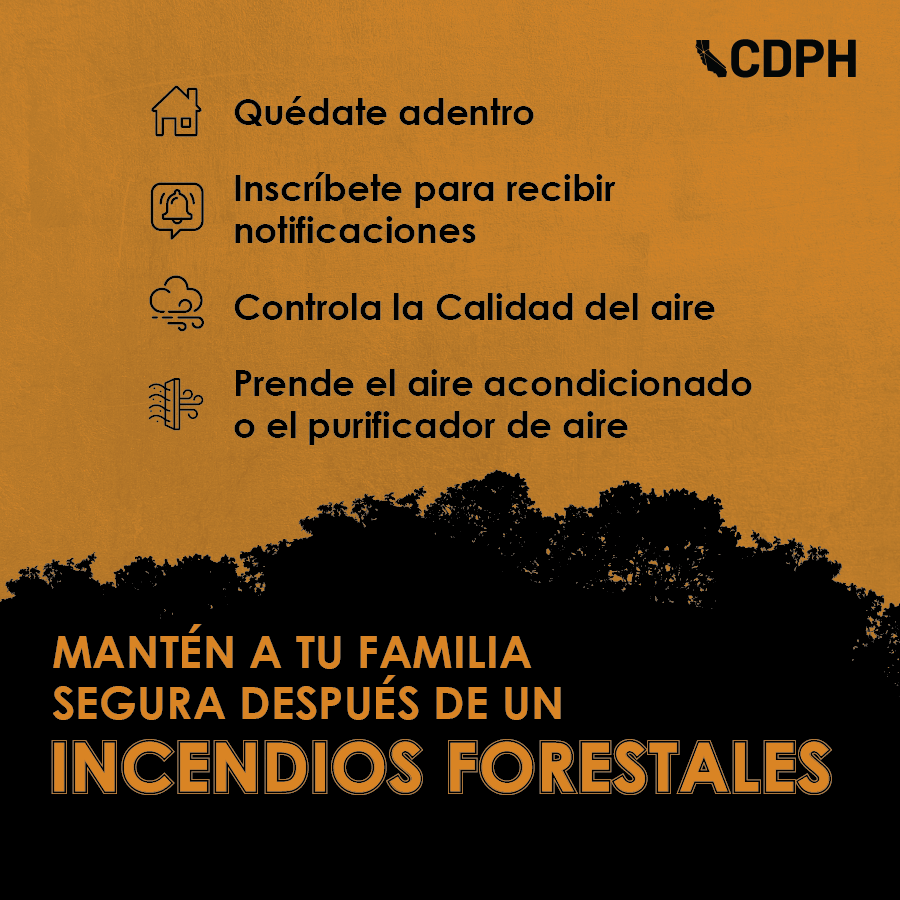
 QUÉDATE ADENTRO   Inscríbete para recibir notificaciones

Suggested Messaging in Spanish

Los incendios forestales pueden producir cenizas en el aire, lo que puede causar tos persistente, secreción nasal, flema, sibilancias y dificultad para respirar. Toma medidas para reducir los contaminantes del aire en tu hogar. 

  • Quédate adentro tanto como sea posible y cierra todas las ventanas, puertas y rejillas de ventilación. 
  • Controla la calidad del aire y regístrate para recibir notificaciones.  
  • Cambia la configuración de tu unidad de aire acondicionado a recircular, cierra las entradas de aire exteriores y / o prende un purificador de aire. 

Si necesitas salir, usa una mascarilla N95, KN95 o KF94. Obtén más información sobre cómo puedes protegerte del humo y las cenizas durante los incendios forestales en: https://www.cdph.ca.gov/Programs/EPO/Pages/Wildfire%20Pages/Smoke-Ash-Safety.aspx 

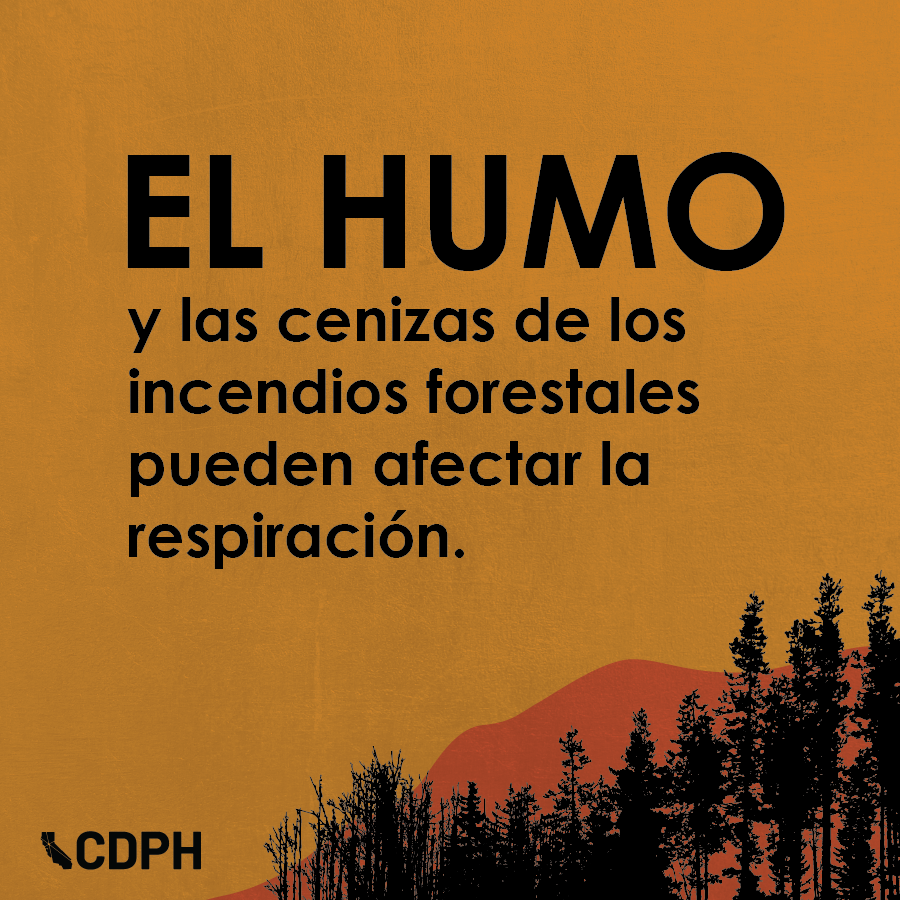
El HUMO de los incendios forestales puede afectar la respiración.

Suggested Messaging in Spanish

El humo de los incendios forestales puede afectar la forma en que respiras, especialmente a aquellos con problemas respiratorios. Si tú o tu hijo tienen asma u otra enfermedad pulmonar, ten a mano un suministro de medicamentos para siete días y llama a un proveedor de atención médica si los incendios forestales cercanos empeoran los problemas respiratorios.​​​                              https://www.cdc.gov/wildfires/risk-factors/wildfire-smoke-and-people-with-chronic-conditions.html​

 Evita respirar el humo de los incendios forestales
El humo puede causar…   Irritación ocular y respiratoria   Función pulmonar reducida
El humo puede causar…   Bronquitis   Empeoramiento de los síntomas del asma

Suggested Messaging in Spanish

El humo de los incendios forestales puede causar irritación ocular y respiratoria e incluso reacciones más graves. Si te encuentras en un área donde hay un incendio forestal, quédate adentro y reduce tus actividades al aire libre. Usa una mascarilla N95 (o KN95 o KF94) si tienes que salir al aire libre. Para obtener más información sobre cómo prepararte para los incendios forestales visita: https://www.cdph.ca.gov/Programs/EPO/Pages/Wildfire%20Pages/Wildfires--.aspx  

¿Cuál es la calidad actual del aire?

Suggested Messaging in Spanish

El humo de los incendios forestales puede causar problemas oculares y respiratorios (pulmones) e incluso reacciones más graves. Usa una mascarilla N95 (o KN95 o KF94) para filtrar los contaminantes y ayudar con la respiración en áreas con mala calidad de aire. Revisa la calidad de aire actual de tu área  en www.airnow.gov y aprende a proteger tu salud del humo de los incendios forestales en: https://www.cdph.ca.gov/Programs/EPO/Pages/Wildfire Pages/Smoke-Ash-Safety.aspx 

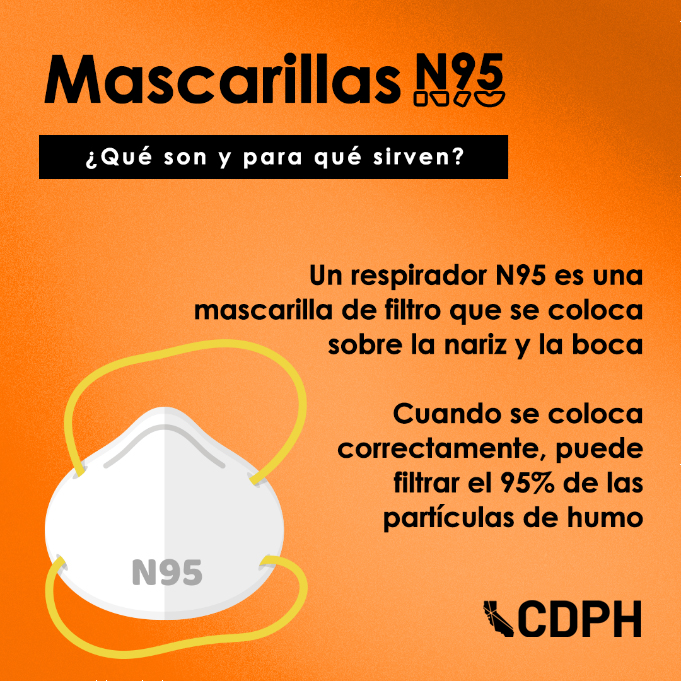
Mascarillas N95 ¿Qué son & qué sirven?

Suggested Messaging in Spanish

Si estás cerca de un incendio forestal, la mejor manera de evitar la inhalación de humo es permanecer adentro. Si tienes que salir al aire libre en condiciones de humo, usa una mascarilla respiratoria N95 o KN95 o KF94. Para obtener más información sobre mascarillas visita: https://www.cdph.ca.gov/Programs/EPO/Pages/Wildfire%20Pages/Wildfires--.aspx 

Mascarillas N95 ¿Contra qué protegen?

Suggested Messaging in Spanish

Las mascarillas N95 (así como las K95 y KN94) pueden filtrar los contaminantes, incluyendo el humo de los incendios forestales y proteger la respiración. Para obtener más información sobre mascarillas y seguridad contra incendios forestales, visita: https://www.cdph.ca.gov/Programs/EPO/Pages/Wildfire%20Pages/Wildfires--.aspx ​

Wildfire Safety & Preparedness​​

Protégete

Suggested Messaging in Spanish

¡Durante un incendio forestal, la prioridad es protegerte y proteger a tus seres queridos! Si se te ordena evacuar tu hogar o el área, hazlo de inmediato. Todo lo demás es secundario. Obtén más información en https://www.cdph.ca.gov/Programs/EPO/Pages/Wildfire%20Pages/Wildfires--.aspx 

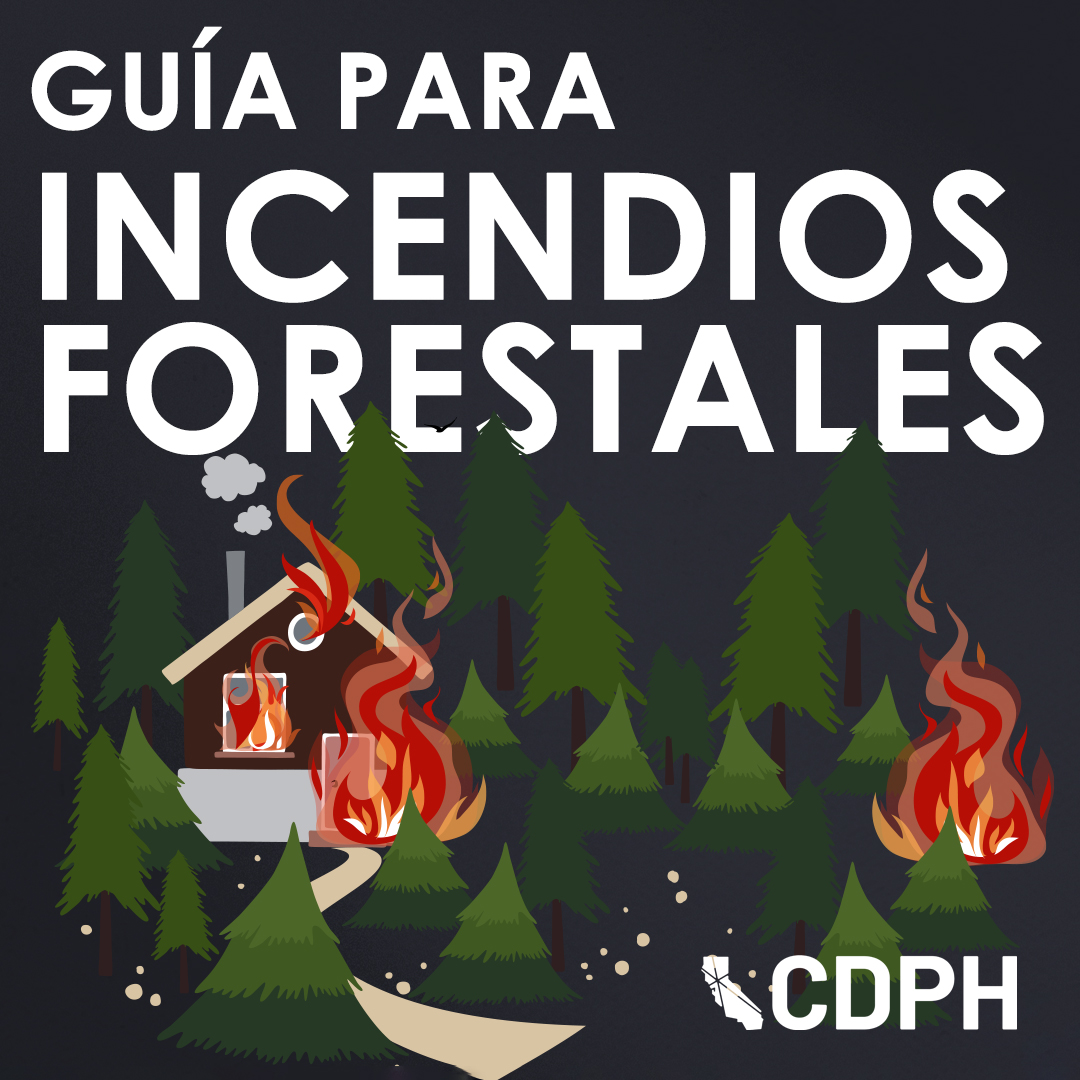
A PARA INCENDIOS FORESTALES

Suggested Messaging in Spanish

Cuando un incendio forestal amenaza tu área, sigue estas pautas:  

  • Presta atención a la radio o televisión local para obtener la información más reciente sobre incendios forestales. 
  • Prepárate para evacuar en cualquier momento. 
  • Asegúrate de tener un kit de emergencia, completo con medicamentos, copias de recetas y suministros médicos. 
  • Ubica refugios cercanos, incluyendo los que aceptan mascotas. Asegúrate de incluir los medicamentos de tu mascota. 
  • Haz arreglos para quedarte con familiares o amigos fuera del área amenazada.  

Obtén más información en https://www.cdph.ca.gov/Programs/EPO/Pages/Wildfire%20Pages/Wildfires--.aspx 

Preparación para incendios forestales
Personas: Ayuda a niños, adultos mayores y personas con discapacidades;  Mascotas: Correas, comida y medicamentos; Recetas: Medi
Pasaporte: Identificación y documentos importantes; Teléfono: Números de teléfono y cargadores; Plástico:Tarjetas de crédito y e

Suggested Messaging in Spanish

Si te ordenan evacuar, ¡hazlo de inmediato! Esta lista puede ayudarte a prepararte si te llega una orden de evacuación:   

  • Personas (ayuda a niños, adultos mayores y personas con discapacidades) 
  • Mascotas 
  • Papeles (documentos importantes) 
  • Teléfonos  
  • Recetas (y lentes) 
  • Fotos 
  • Computadoras (por la información que contienen) 
  • Plástico (tarjetas de crédito y efectivo) 

Obtén más información en https://www.cdph.ca.gov/Programs/EPO/Pages/Wildfire%20Pages/Wildfires--.aspx 

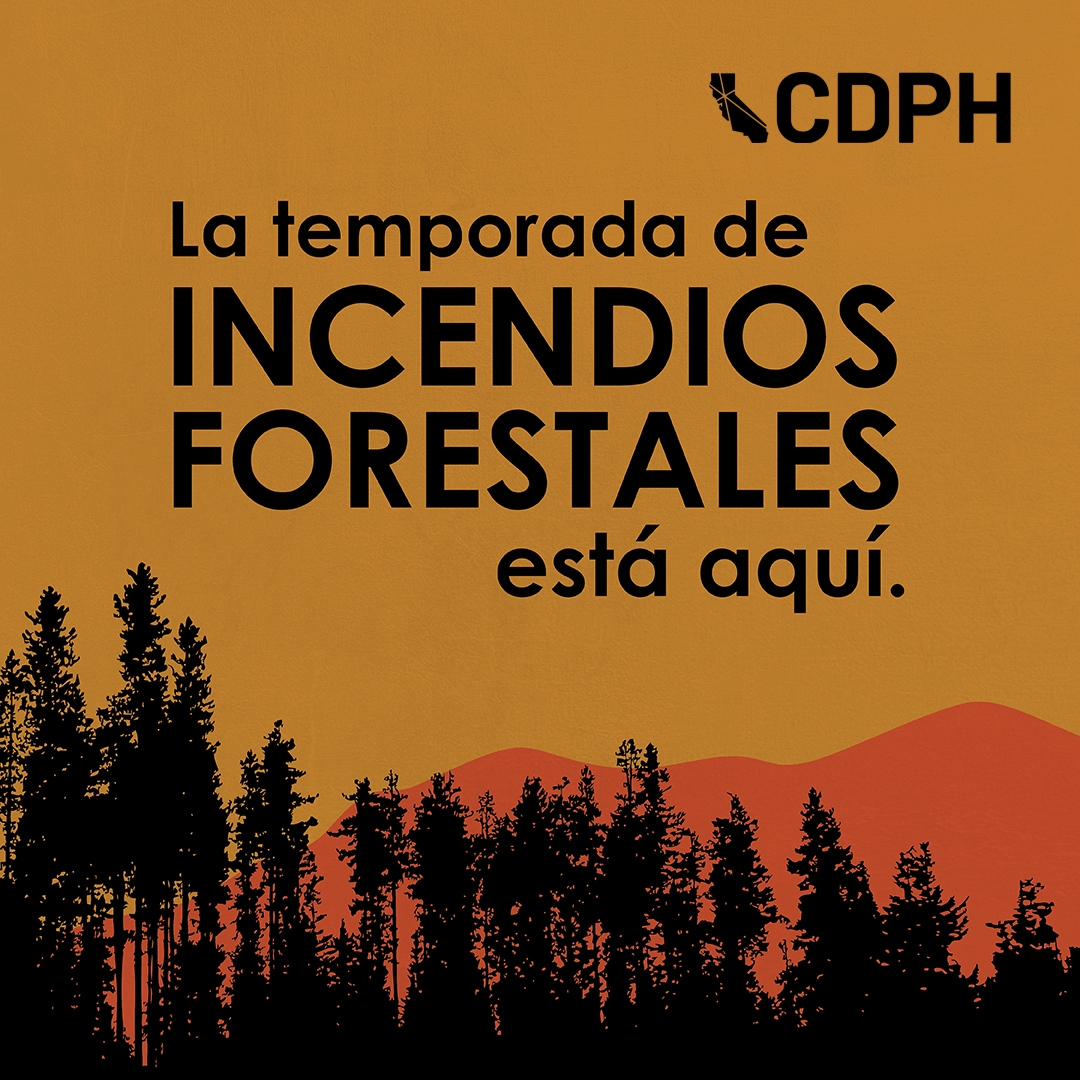
La temporada de incendios forestales está aquí.

Suggested Messaging in Spanish

La temporada de incendios forestales está aquí, ¿estás listo? Haz planes con anticipación para que puedas reaccionar rápidamente si es necesario. Prepárate con: 

  • Kit de emergencia de 3 días con artículos esenciales (alimentos, agua, registros, medicamentos) para cada miembro de la familia y mascotas 
  • Mascarillas N95 
  • Planes de evacuación 

Obtén información sobre las mejores maneras de prepararte para los incendios forestales en https://www.cdph.ca.gov/Programs/EPO/Pages/Wildfire%20Pages/Wildfires--.aspx 

Mantén tus alimentos seguros durante los cortes de energía
Suggested Messaging in Spanish
Practica la seguridad alimentaria si se va la luz.   
  • Mantén las puertas del refrigerador y del congelador cerradas tanto como sea posible. Un refrigerador mantendrá los alimentos fríos durante aproximadamente 4 horas si la puerta se mantiene cerrada. Un congelador lleno mantendrá su temperatura durante aproximadamente 48 horas (24 horas si está medio lleno).   
  • ​Si has estado sin electricidad durante más de 4 horas, desecha los alimentos perecederos refrigerados.   
  • Una vez que se restablezca la energía, usa termómetros para electrodomésticos para mantener el congelador a 0 ° F o menos y el refrigerador a 40 ° F o menos.   
  • Usa hielo seco o congela recipientes de agua y paquetes de hielo de gel para ayudar a mantener los alimentos fríos si se corta la electricidad.   
  • Ante la duda, descártalo.   
Obtén más información sobre la seguridad alimentaria durante los cortes de energía:  https://www.cdc.gov/food-safety/foods/keep-food-safe-after-emergency.html
X:
Practica la seguridad alimentaria cuando se corte la electricidad manteniendo las puertas del refrigerador y el congelador cerradas tanto como sea posible. Ante la duda, descártalo. 

​​Mental Health

La salud mental es importante
Suggested Messaging in Spanish
La angustia emocional durante un incendio forestal puede ser increíblemente desafiante, pero hay ayuda disponible. Si tu o alguien que conoces necesita ayuda, llama a la línea de ayuda gratuita para casos de desastre al 1-800-985-5990. Está disponible en varios idiomas, incluido el lenguaje de señas estadounidense.   ​
X:
Si tu o alguien que conoces está experimentando angustia emocional debido a los incendios forestales, llama a la Línea de Ayuda gratuita para Desastres al 1-800-985-5990. Más información en
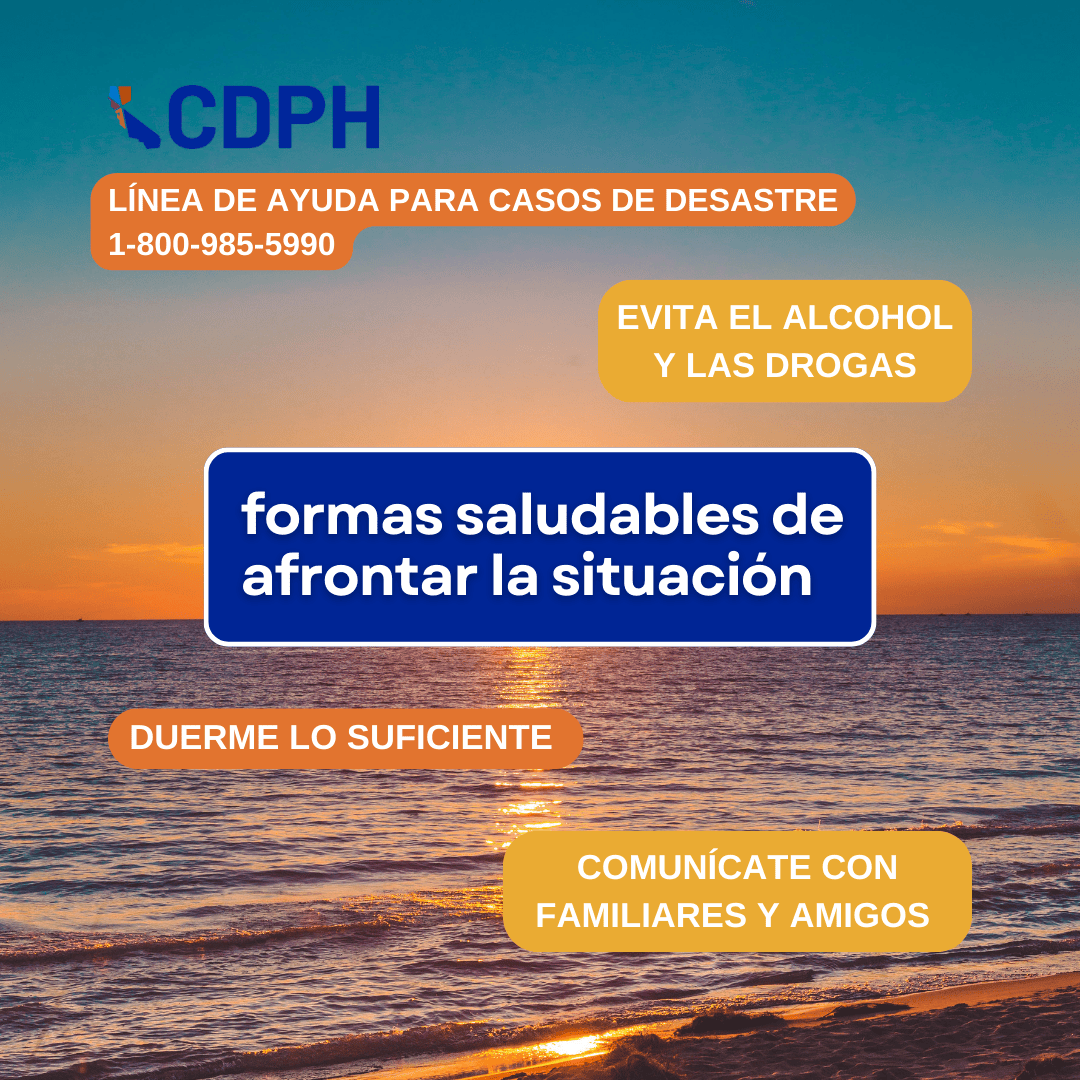
Formas saludables de afrontar la situación
Suggested Messaging in Spanish
Muchas personas experimentan estrés, ansiedad y angustia durante y después de un incendio forestal. Es importante encontrar formas saludables de sobrellevar la ocurrencia de estos eventos. Si es posible:  
  • Evita el alcohol y las drogas  
  • Duerme lo suficiente  
  • Comunícate con familiares y amigos
Si tu o alguien que conoces necesita ayuda, llama a la línea de ayuda gratuita para casos de desastre al 1-800-985-5990. Más consejos en go.cdph.ca.gov/WildfireMentalHealth
X:
Si tu o alguien que conoces está experimentando angustia emocional debido a los incendios forestales, llama a la Línea de Ayuda gratuita para Desastres al 1-800-985-5990. Más información en
Ayuda a tus hijos a sobrellevar la ansiedad y el estrés causados por los incendios forestales. ​​
Suggested Messaging in Spanish
Los niños pueden tener dificultades para lidiar con el estrés y la ansiedad causados por los incendios forestales. Durante este tiempo, es importante prestar mucha atención al bienestar emocional de los niños al estar atentos a los cambios en el comportamiento y escuchar atentamente las preguntas. Puedes ayudar a tus hijos a sobrellevar la situación de la siguiente manera:    
  • Validar sus sentimientos   
  • Brindarles oportunidades para hablar y expresarse a través de medios como dibujar o jugar.   
  • Alentarlos a comer alimentos saludables, hacer ejercicio y mantener patrones de sueño saludables   
  • Limitar su consumo de noticias   
  • Mantener el mismo horario diario cuando sea posible   
X: 
Los niños pueden tener dificultades para lidiar con el estrés y la ansiedad causados por los incendios forestales. Los padres pueden ayudar a sus hijos a sobrellevar y procesar sus emociones.    

​Ash Safety​

Persona jardinando en el jardín trasero
Suggested Messaging in Spanish:
Durante y después de los incendios forestales, las cenizas pueden llegar a tu jardín y cubrir tus plantas y frutos. Sigue estos pasos para protegerte de las cenizas, que pueden contener sustancias químicas tóxicas dañinas para tu salud:
  • Espera hasta que las condiciones exteriores se despejen antes de retirar la​s cenizas de tu jardín.
  • Inspecciona cuidadosamente tus productos en busca de signos de depósito de cenizas.
  • Lava y frota bien los productos antes de almacenarlos, cocinarlos, enlatarlos o comerlos. 
  •  Retira las hojas exteriores de las verduras de hoja verde como la lechuga, la col rizada y las acelgas.
  • Pela las papas y otros tubérculos antes de comerlos. Si es posible, pela también otras frutas y verduras.
  • No plantes tubérculos en tierra contaminada.
Más consejos:
https://www.cdph.ca.gov/Programs/EPO/Pages/Wildfire%20Pages/ash-homegardens.aspx
X:
Durante y después de los incendios forestales, las cenizas pueden cubrir tus plantas y frutos. Aprende sobre cómo protegerte de las cenizas, que pueden contener sustancias tóxicas dañinas para tu salud: https://www.cdph.ca.gov/Programs/EPO/Pages/Wildfire%20Pages/ash-homegardens.aspx
​​Mantén a tus hijos alejados de las cenizas y limpia sus juguetes.
Suggested Messaging in Spanish
Las cenizas de los incendios forestales cercanos y las estructuras quemadas pueden causar problemas de salud. Mantén a los niños alejados de las cenizas y asegúrate de limpiar los juguetes que contengan cenizas antes de que tus hijos jueguen con ellos.    
Aprende más:
Mantén tu hogar libre de cenizas. Limpia las superficies interiores con frecuencia.
Suggested Messaging in Spanish
Las cenizas de los incendios forestales cercanos y las estructuras quemadas pueden llegar al interior de tu casa e irritar la piel, los ojos, la nariz y la garganta. Mantente a ti y a tu hogar seguros cuando limpies el interior:
  • Usa una mascarilla N95 o P100 ajustada  
  • Limpia las superficies con frecuencia  
  • Usa un paño húmedo, una aspiradora con filtro HEPA y un trapeador húmedo No use aspiradoras de taller u otras aspiradoras comunes 
  • No uses una escoba  
Aprende más:
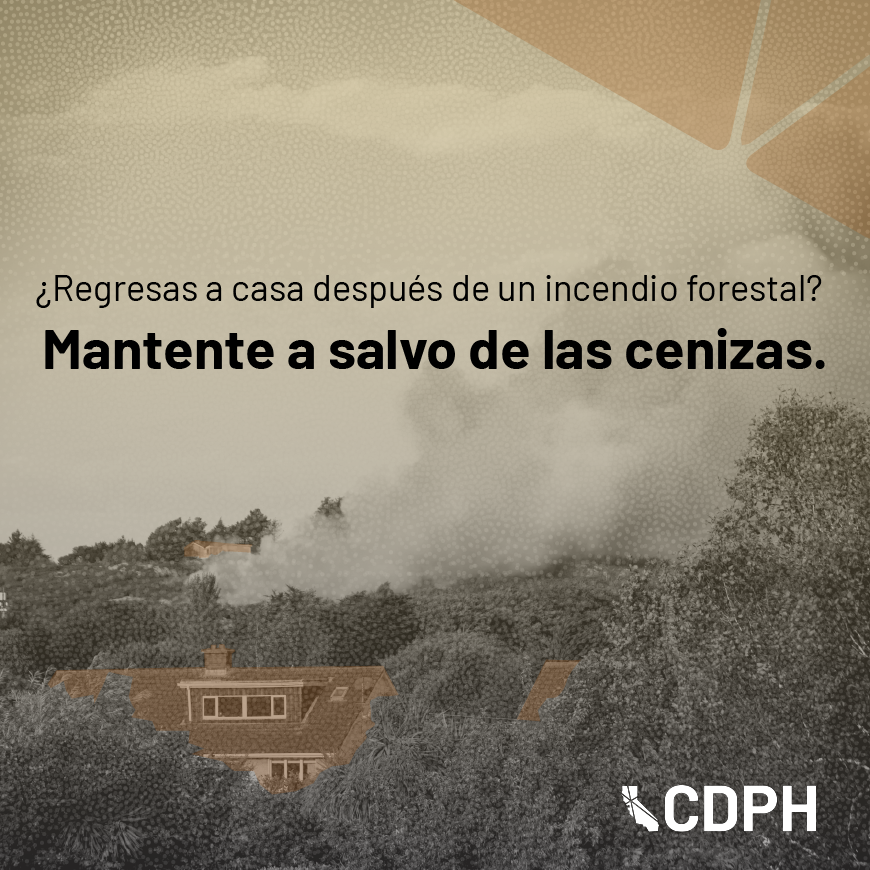
¿Regresas a casa después de un incendio forestal? Mantente a salvo de las cenizas.
Suggested Messaging in Spanish: ​
Los incendios forestales pueden dejar cenizas y escombros peligrosos a tu paso. Permanece adentro si hay incendios forestales activos o mala calidad del aire en tu área.   
Las cenizas contienen metales tóxicos y productos químicos que pueden dañar tu salud. Puede irritar la piel, los ojos, la nariz y la garganta, dificultar la respiración y causar otros problemas de salud. Es especialmente peligroso para los adultos mayores, los niños, las mujeres embarazadas y las personas con enfermedades cardíacas y pulmonares, incluido el asma.   
Aprende más:

​Virus Prevention in Shelters​

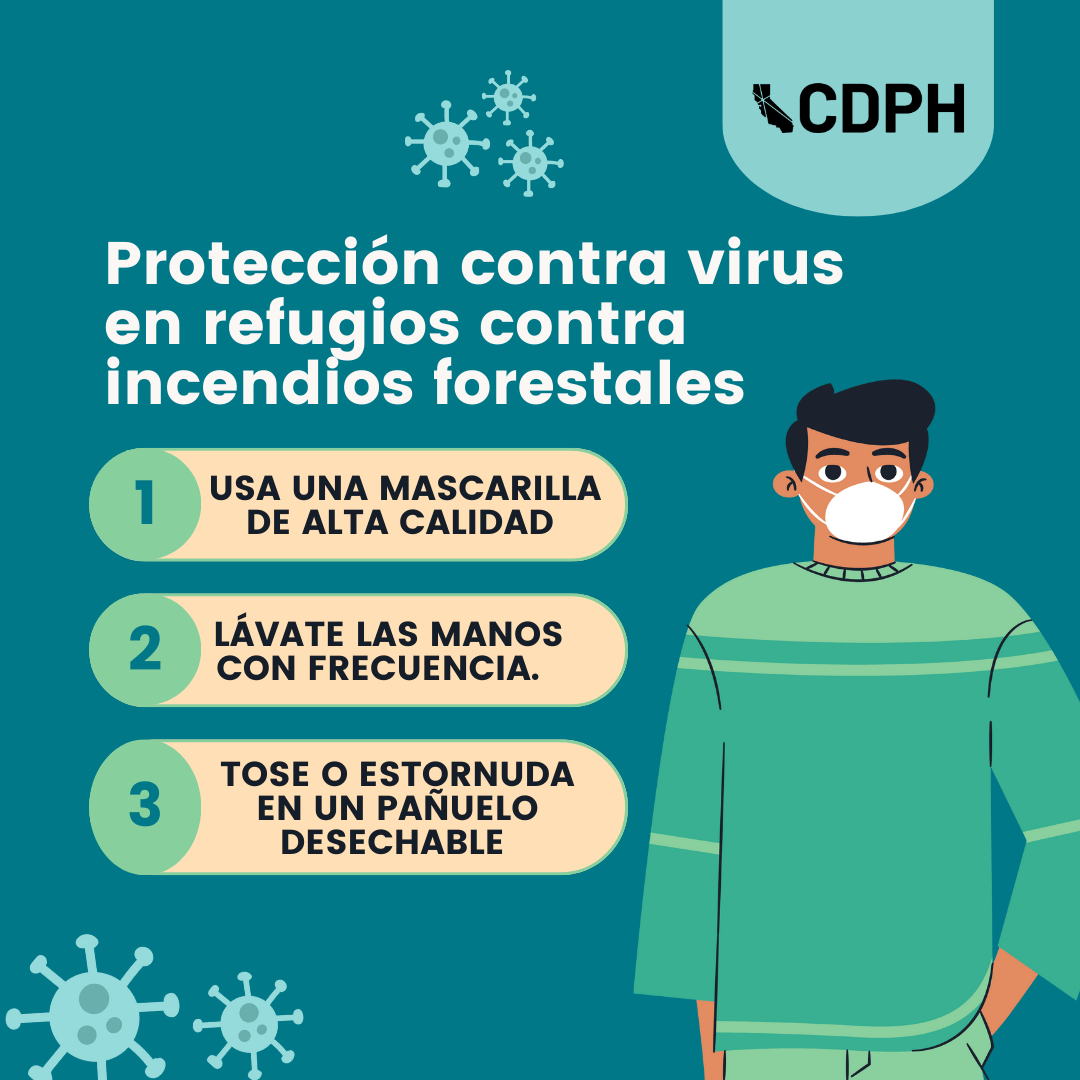
Consejos para protegerse contra virus en refugios: Usa una mascarilla, Lávate las manos, detener la propagación
Suggested Messaging in Spanish: ​
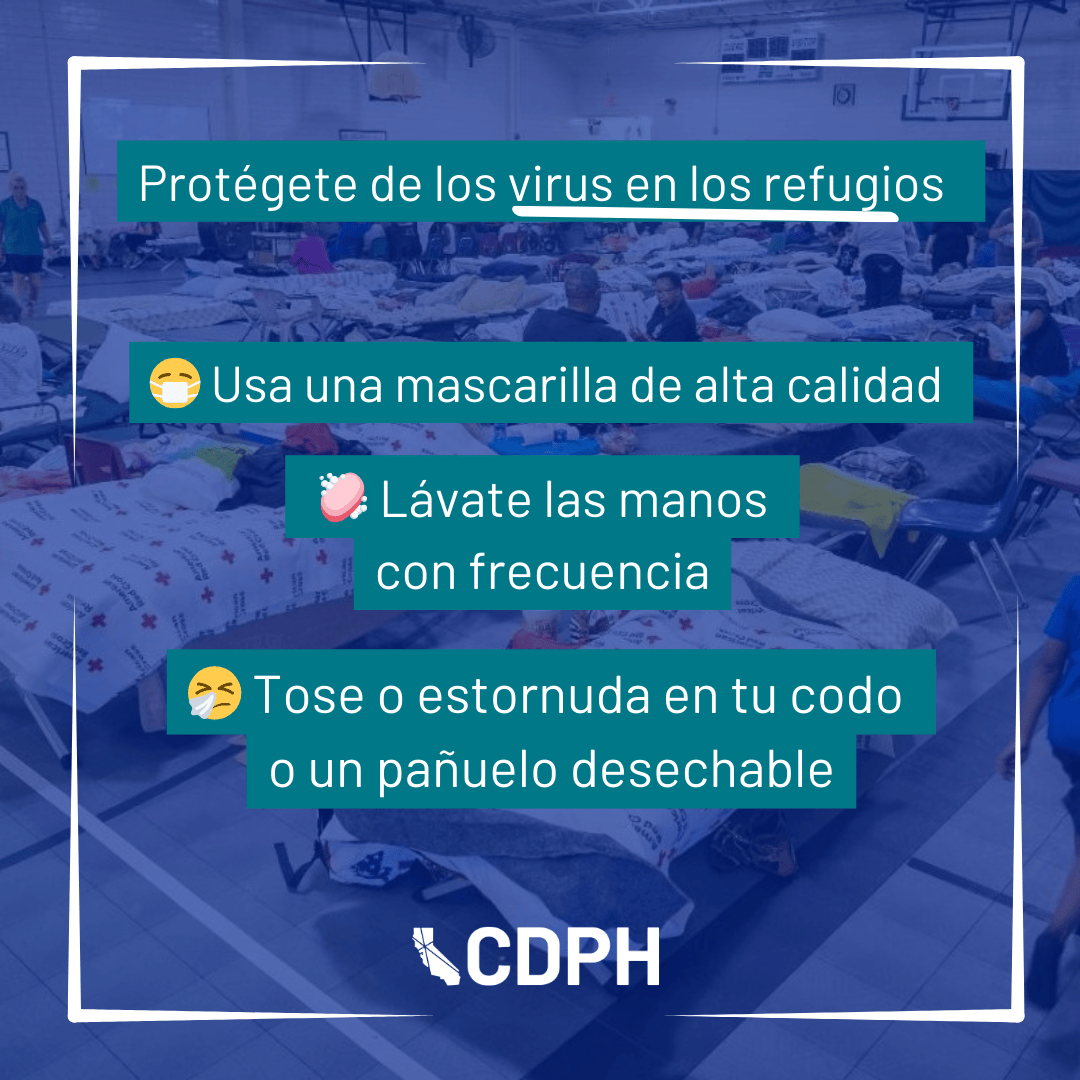
Protégete de los virus en los refugios  
Si te encuentras en un refugio de evacuación debido a los incendios forestales en Los Ángeles, asegúrate de no solo mantenerte a salvo del humo, sino también de los gérmenes. Estos son algunos consejos clave para la prevención de virus:   
  • Usa una mascarilla de alta calidad como una N95 para protegerte de los virus dañinos.   
  • Lávate las manos frecuentemente con agua y jabón durante al menos 20 segundos, especialmente antes de las comidas. Si no hay jabón disponible, usa un desinfectante de manos con al menos un 60 % de alcohol.   
  • Toser o estornudar en el codo o en un pañuelo desechable. Desecha el pañuelo inmediatamente y lávate o desinfecta tus manos.   
Para obtener más información, visita 
Protégete de los virus en los refugios
Suggested Messaging in Spanish: ​
Durante las evacuaciones por incendios forestales, los riesgos para la salud van más allá del humo. Los virus como la gripe, el COVID-19, el VRS y el norovirus pueden propagarse rápidamente en espacios concurridos. A continuación, le indicamos cómo mantenerse seguro mientras está en un refugio:  
  • ​​​​Usa una mascarilla de alta calidad para reducir la propagación de virus respiratorios.  
  • Lávete las manos con frecuencia durante al menos 20 segundos o usa un desinfectante de manos (60% + alcohol) cuando no haya jabón disponible. Nota: ¡solo el agua y el jabón funcionan con los gérmenes de norovirus!  
  • Cúbrete la boca al toser y estornudar con el codo, el brazo o un pañuelo desechable. Desecha los pañuelos desechables inmediatamente y desinfecta tus manos.  
Al seguir estos pasos, estás ayudando a protegerte no solo a ti mismo, sino también a todos a tu alrededor. Mantente seguro, mantente saludable.
Obtén más información en: go.cdph.ca.gov/respiratory-viruses​


Page Last Updated :