
Suggested Messaging:
Drowning is often quick and silent. Take these steps to prevent drowning:
- Always supervise children around pools and near water, even when lifeguards are present.
- Have children wear a properly fitting, U.S. Coast Guard-approved life jacket for their size and weight.
|
Suggested Messaging:
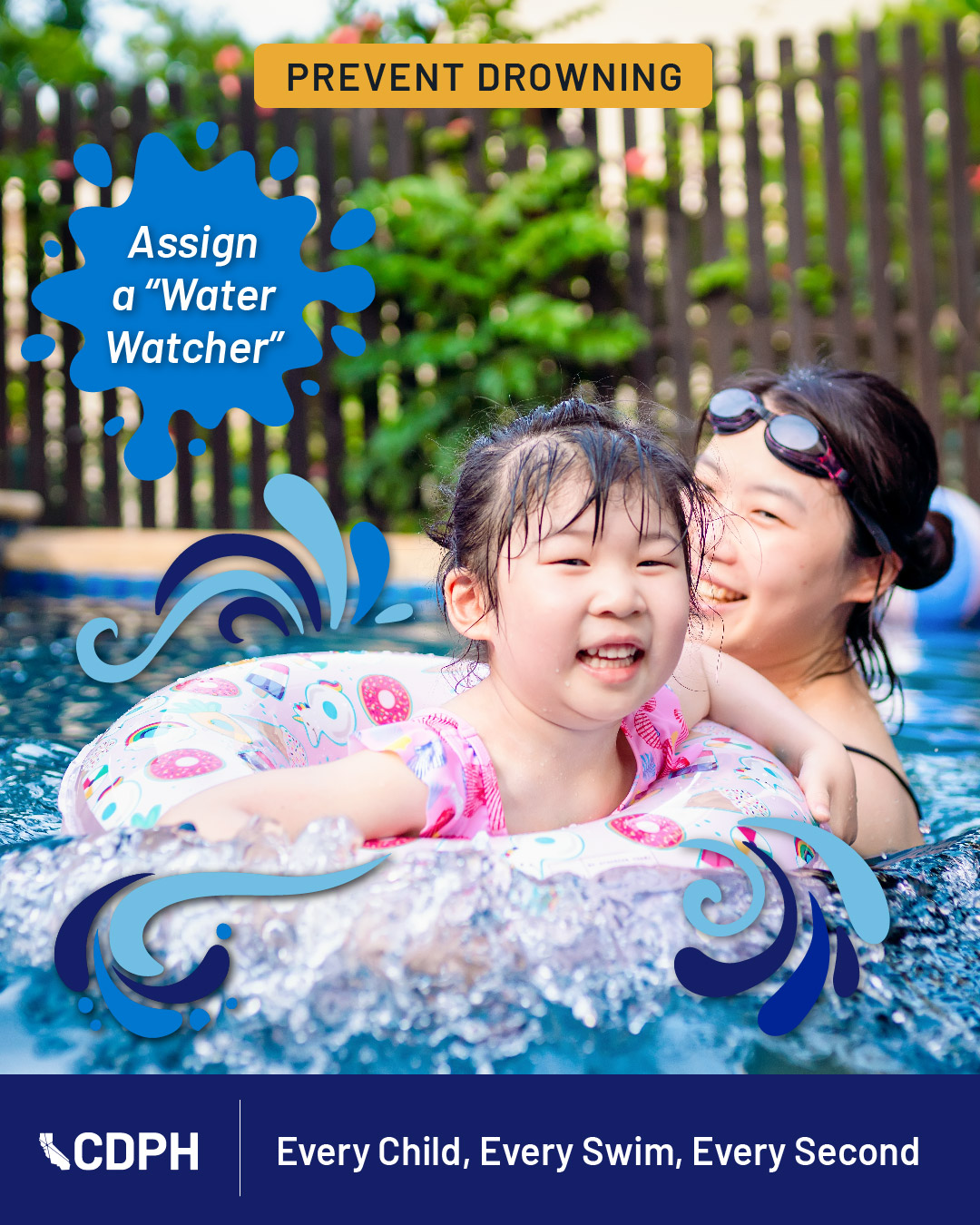
Keep water activities and swim time safe and fun by having an alert, sober and undistracted “water watcher” every time children are swimming. No cell phones, reading, drugs or alcohol. Switch watchers every 20 minutes to stay fresh and focused.
|
Suggested Messaging:
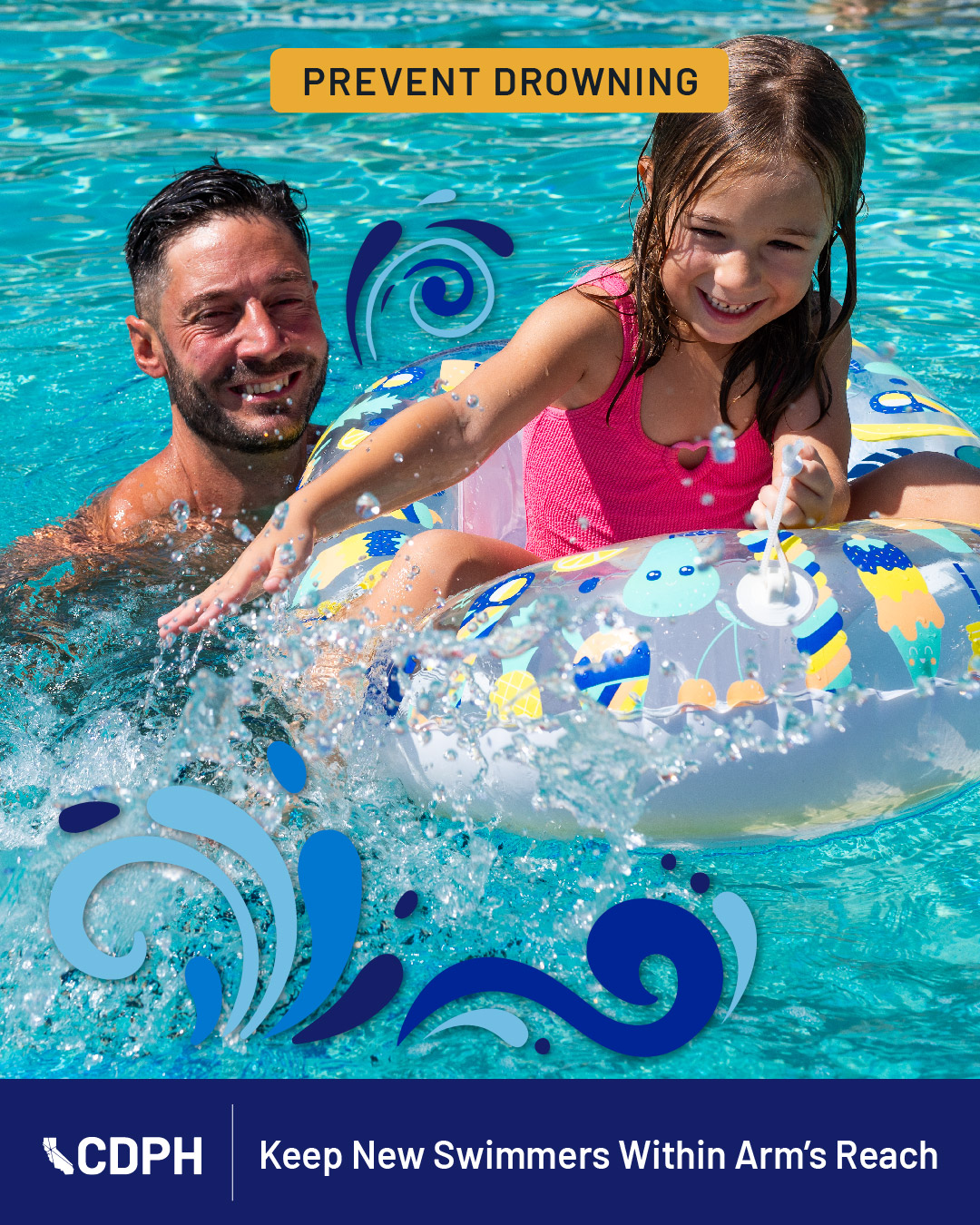
As temperatures heat up, keep water safety top of mind. Prevent drowning by always keeping new or inexperienced swimmers and young children within arm’s reach when swimming or around water.
|
Suggested Messaging:
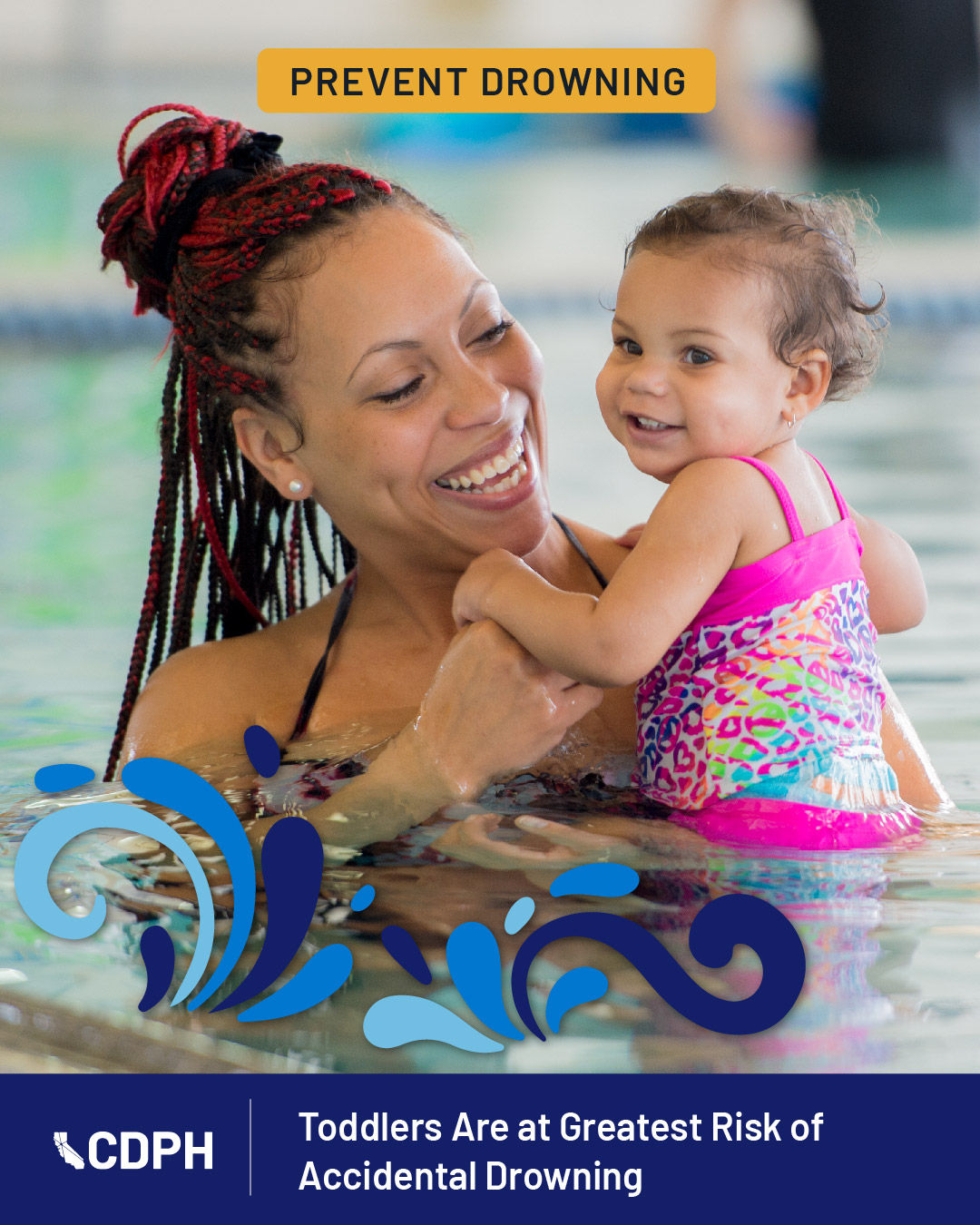
Children ages 1–4 are at greatest risk of drowning. Toddlers are mobile, curious and fast. They can fall in and drown quickly and silently without calling for help.
Constant adult supervision is key! Never leave young children alone around pools or near bodies of water, even for a few seconds.
X/Bluesky:
Children ages 1–4 are at greatest risk of drowning. Toddlers are mobile, curious, and fast. Always watch children around pools and near water. Never leave them alone, even for a few seconds.
|
Suggested Messaging:
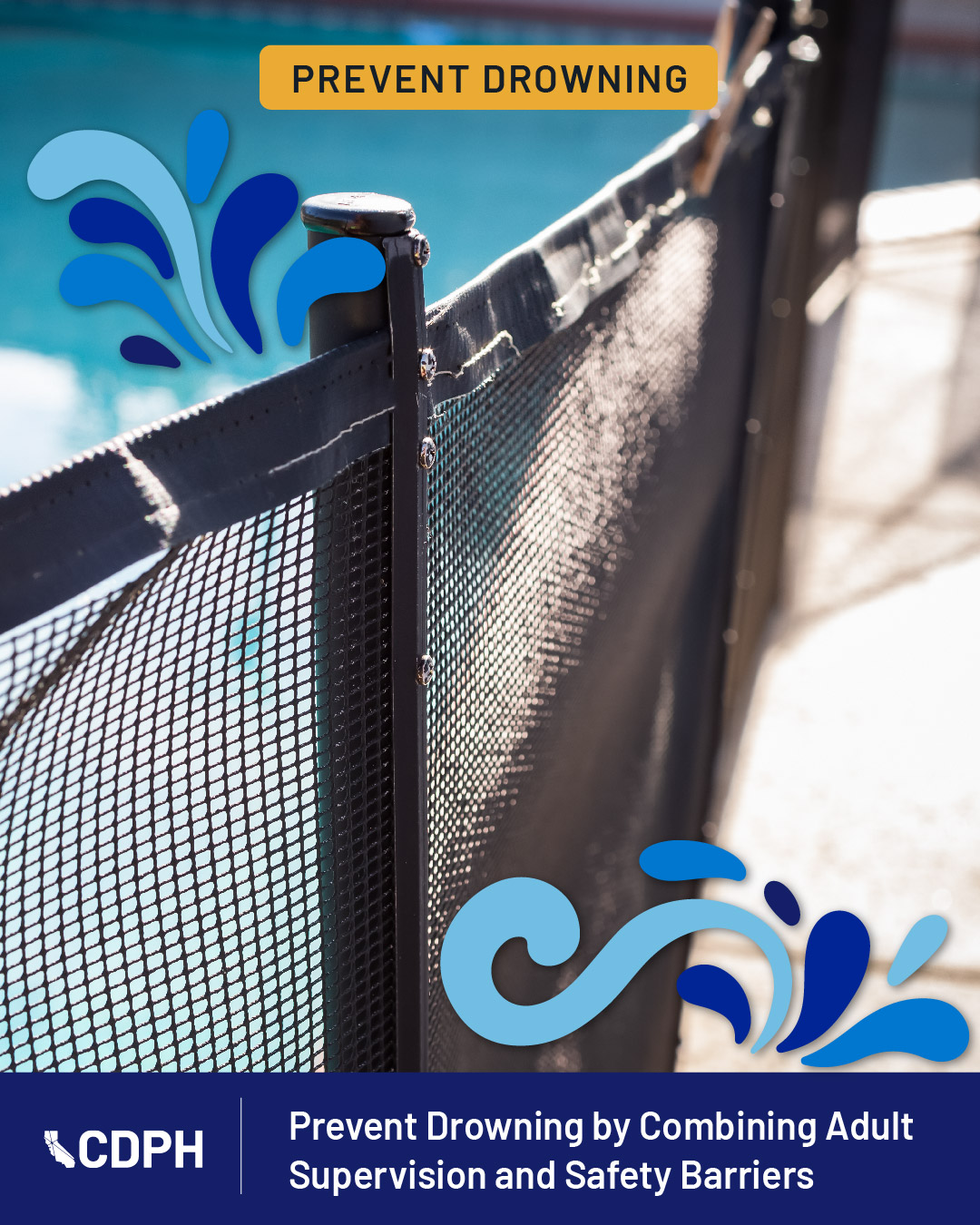
Do you have a pool? Prevent drowning with layers of safety:
- Install a four-sided fence at least four feet tall that fully encloses the pool. Make sure it has a self-closing and self-latching gate
- Learn CPR for drowning victims
- Always keep rescue equipment near the pool
- Remove toys from the pool area that might attract children
X/Bluesky:
Prevent drowning with layers of safety:
- Install a 4-sided, 4-foot fence around pool with self-closing & self-latching gate
- Learn CPR for drowning
- Always keep rescue equipment near pool
- Remove toys from pool area
|
Suggested Messaging:
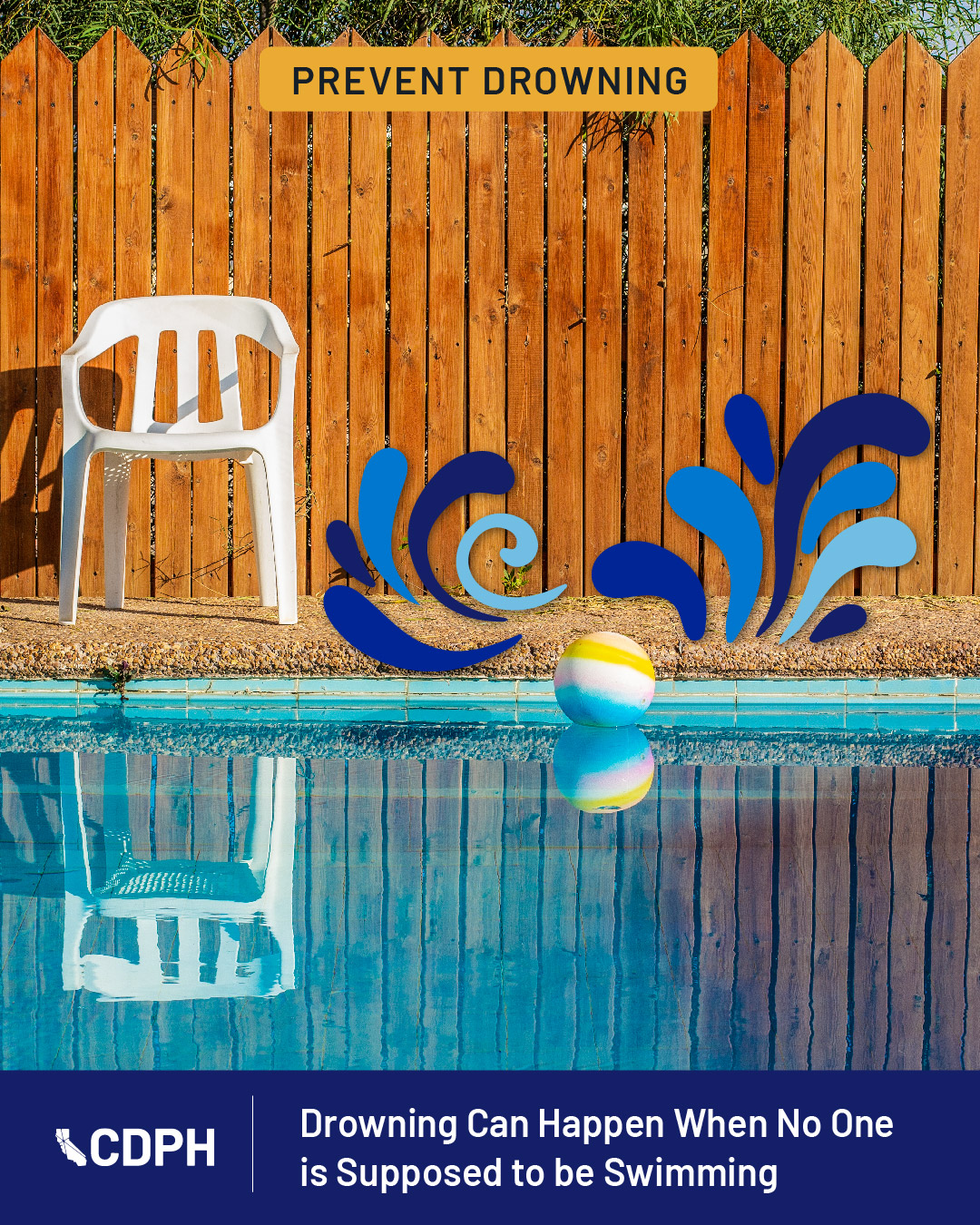
Young children can sometimes go outside unnoticed. If a child is missing, check the pool or spa area first.
Prevent drowning with:
- Adult supervision at all times (including when visiting others’ homes).
- Swim safety classes and lessons starting at a young age.
- A four-sided fence at least four feet tall that fully encloses the pool, with self-closing and self-latching gate.
X/Bluesky:
Young children can go outside unnoticed. Prevent drowning with:
- Adult supervision at all times
- Swim safety classes and lessons starting at a young age
- 4-sided, 4-foot fence around pool with self-closing & self-latching gate
|

Suggested Messaging:
Enjoying the sun with friends at the pool, beach or near other bodies of water is a blast but stay alert and be careful.
Here are some tips to prevent drowning:
- Take formal swim lessons, it’s never too late!
- Always swim with a buddy.
- Know your limits — don’t overestimate your swimming abilities.
- Don’t use alcohol or drugs when swimming or boating.
- Learn CPR and basic water safety.
- Choose swimming spots with lifeguards on duty.
- Enter the water feet first the first time and follow “No Diving” signs.
Learn more tips:
X/Bluesky:
Tips to prevent drowning & keep you safe:
- Take formal swim lessons
- Swim with a buddy
- Know swimming limits
- Don’t use alcohol or drugs
- Learn CPR & water safety
- Swim when lifeguard is on duty
- Enter water feet first & follow “No Diving” signs
|
|
Suggested Messaging:
Drowning is the leading cause of unintentional death for toddlers in California. A non-fatal drowning often causes permanent brain damage from lack of oxygen. Protect children and prevent drowning with these 3 ways to keep kids safe around water.
|
|
|

Suggested Messaging:
El ahogamiento suele ser rápido y silencioso. Tome estas medidas para prevenirlo:
- Siempre supervise a los niños en piscinas y cerca del agua, incluso cuando haya guardavidas presentes.
- Asegúrese de que los niños usen un chaleco salvavidas aprobado por la Guardia Costera de EE.UU., que se ajuste adecuadamente a su tamaño y peso.
|

Suggested Messaging:
Mantenga las actividades acuáticas y el tiempo de natación seguros y divertidos asignando "guardavidas" que estén alertas, sobrios y atentos a los niños que están nadando, y que no estén usando su teléfono celular, leyendo o consumiendo drogas ni alcohol. Cambie de guardavidas cada 20 minutos para que se mantenga alerta y enfocado.
|
Suggested Messaging:
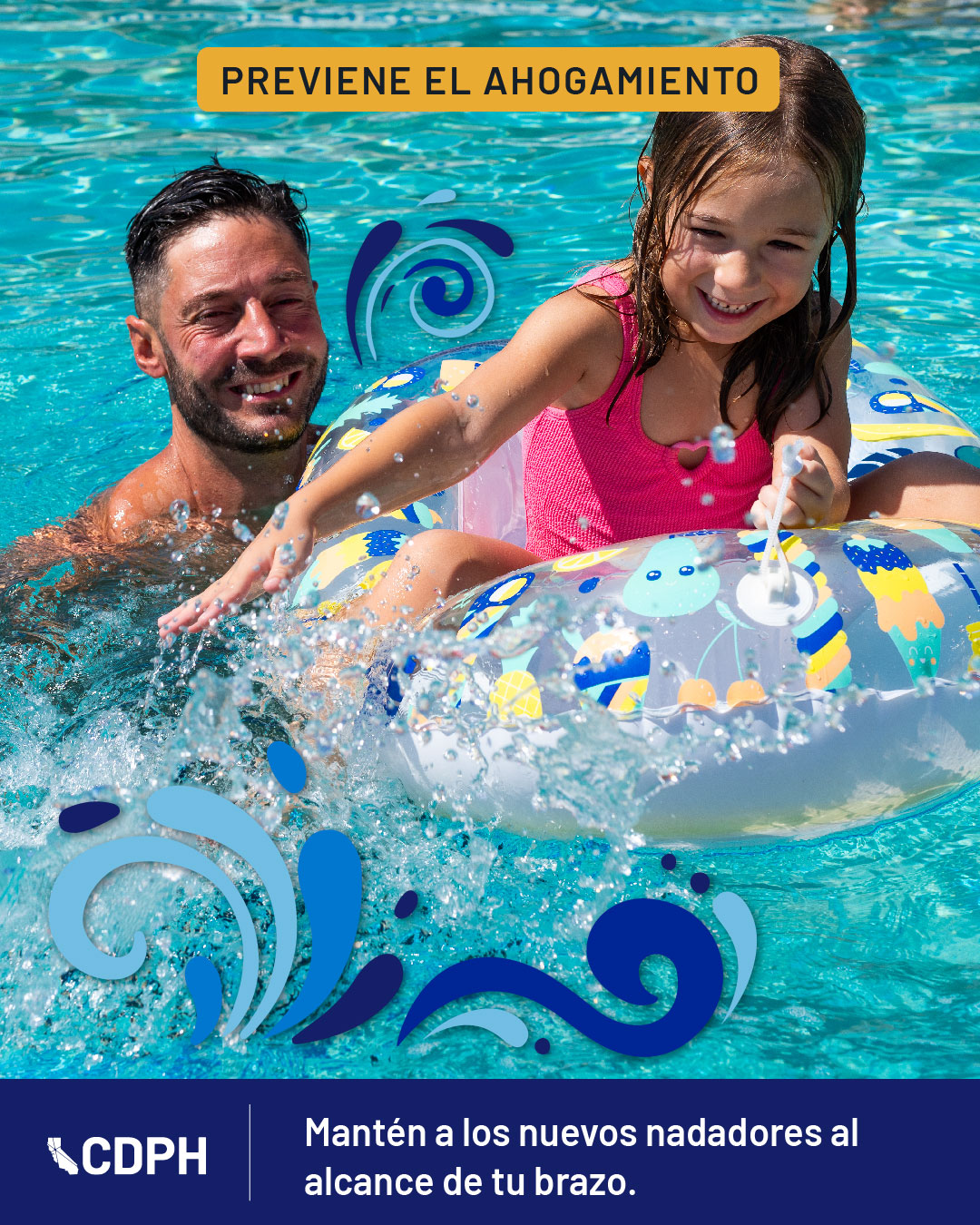
A medida que aumenta la temperatura, priorice la seguridad acuática. Prevenga que nadadores principiantes o inexpertos y niños pequeños se ahoguen, manteniéndolos al alcance de la mano cuando estén nadando o cerca del agua.
|
Suggested Messaging:
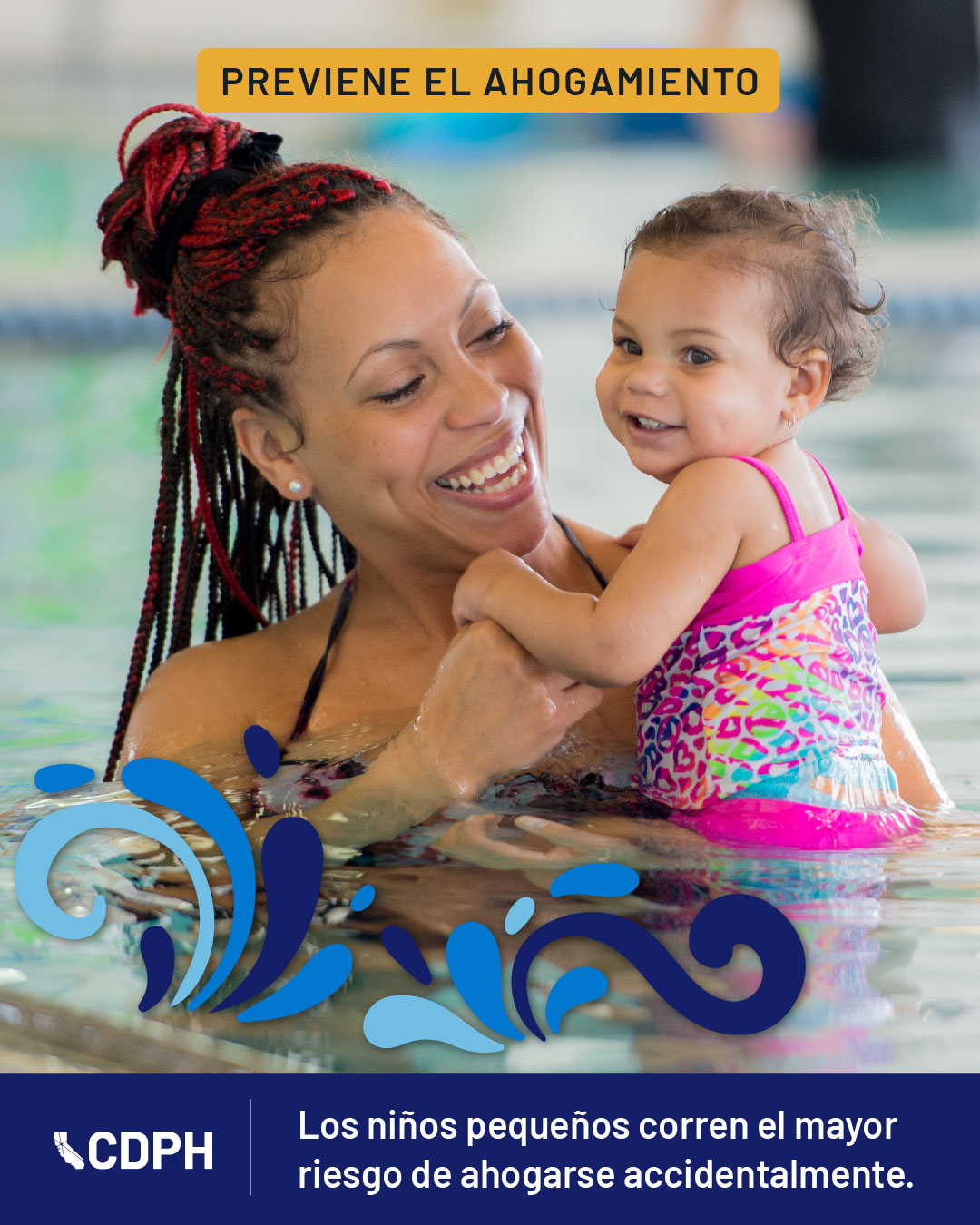
Los niños de 1 a 4 años corren el mayor riesgo de ahogarse. Los niños pequeños son activos curiosos e inquietos. Pueden caerse al agua y ahogarse rápida y silenciosamente, sin pedir ayuda.
¡La supervisión constante de un adulto es fundamental! Nunca deje solos a los niños pequeños en piscinas o cerca de cuerpos de agua, ni siquiera por unos segundos.
X/Bluesky:
Los niños de 1 a 4 años corren el mayor riesgo de ahogarse. Los niños pequeños son activos, curiosos e inquietos. Siempre vigile a los niños que estén en la piscina y cerca del agua. Nunca los deje solos, ni siquiera por unos segundos.
|
Suggested Messaging:
¿Tiene una piscina? Prevenga el ahogamiento con múltiples capas de seguridad:
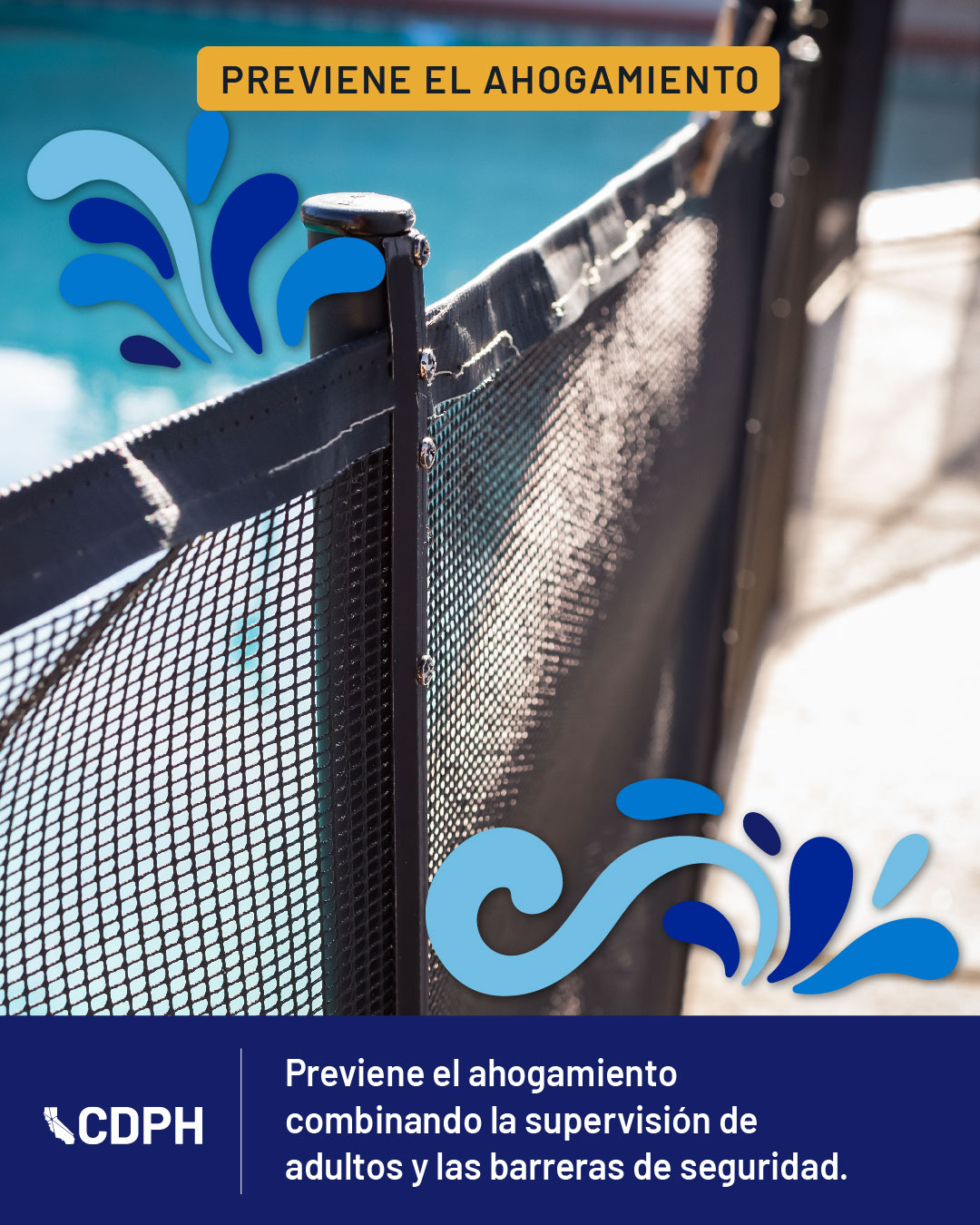
- Instale una cerca de cuatro lados de al menos cuatro pies de altura que cierre completamente la piscina. Asegúrese de que tenga una puerta con cierre automático y pestillo.
- Aprenda primeros auxilios para víctimas de ahogamiento.
- Mantenga siempre el equipo de rescate cerca de la piscina.
- Retire los juguetes del área de la piscina que puedan atraer a los niños.
|

Suggested Messaging:
Los niños pequeños pueden escabullirse sin que nadie lo note. Si un niño desaparece, revise primero el área de la piscina o spa.
Evite que se ahoguen con:
- Supervisión adulta en todo momento (incluso al visitar otros hogares).
- Clases y lecciones de seguridad en la natación desde una edad temprana.
- Una cerca de cuatro lados y al menos cuatro pies de altura que cierre completamente la piscina, con una puerta de cierre automático y pestillo.
|
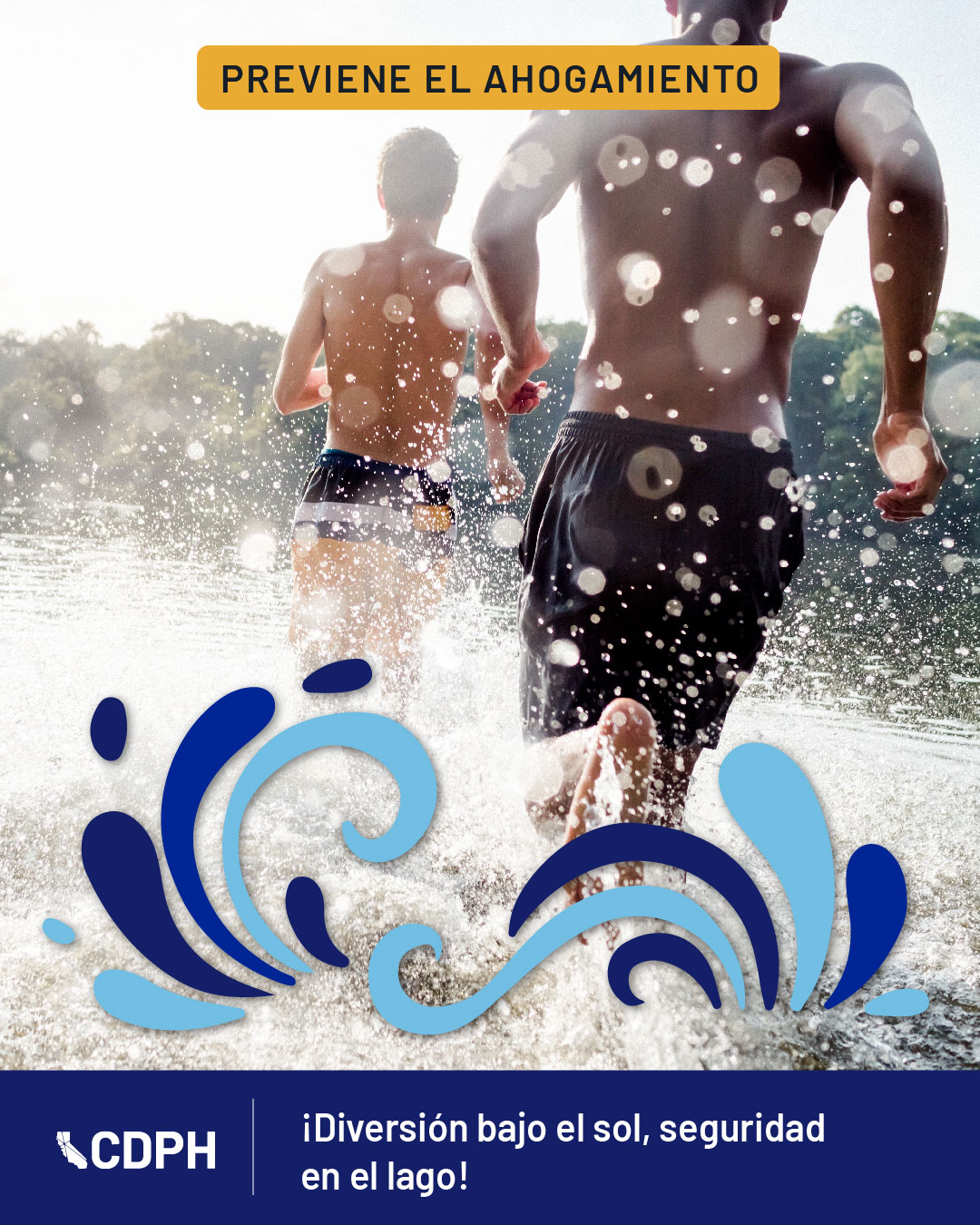
Suggested Messaging:
Disfrutar del sol con amigos en la piscina, la playa o cerca de otros cuerpos de agua es divertido, pero manténgase alerta y tenga cuidado.
Aquí hay algunos consejos para prevenir el ahogamiento:
- Tome clases de natación formales, ¡nunca es demasiado tarde!
- Siempre nade con un compañero.
- Conozca sus límites—no sobrestime sus habilidades de natación.
- No consuma alcohol ni drogas al nadar o navegar.
- Aprenda primeros auxilios y seguridad básica en el agua.
- Elija lugares para nadar donde haya guardavidas de turno.
- La primera vez que entre al agua, hágalo poniendo primero los pies y obedezca los carteles de "No zambullirse".
|
Suggested Messaging:
El ahogamiento es la principal causa de muerte accidental de niños pequeños en California. Aún en casos en que el ahogamiento no cause la muerte, puede causar daño cerebral permanente debido a la falta de oxígeno. Proteja a los niños y prevenga que se ahoguen con estas 3 formas de mantenerlos seguros cerca del agua.
go.cdph.ca.gov/DrowningPrevention
|